Orbit 65
Lovable from zero to $400m in 15 months with CRO, Ryan Meadows
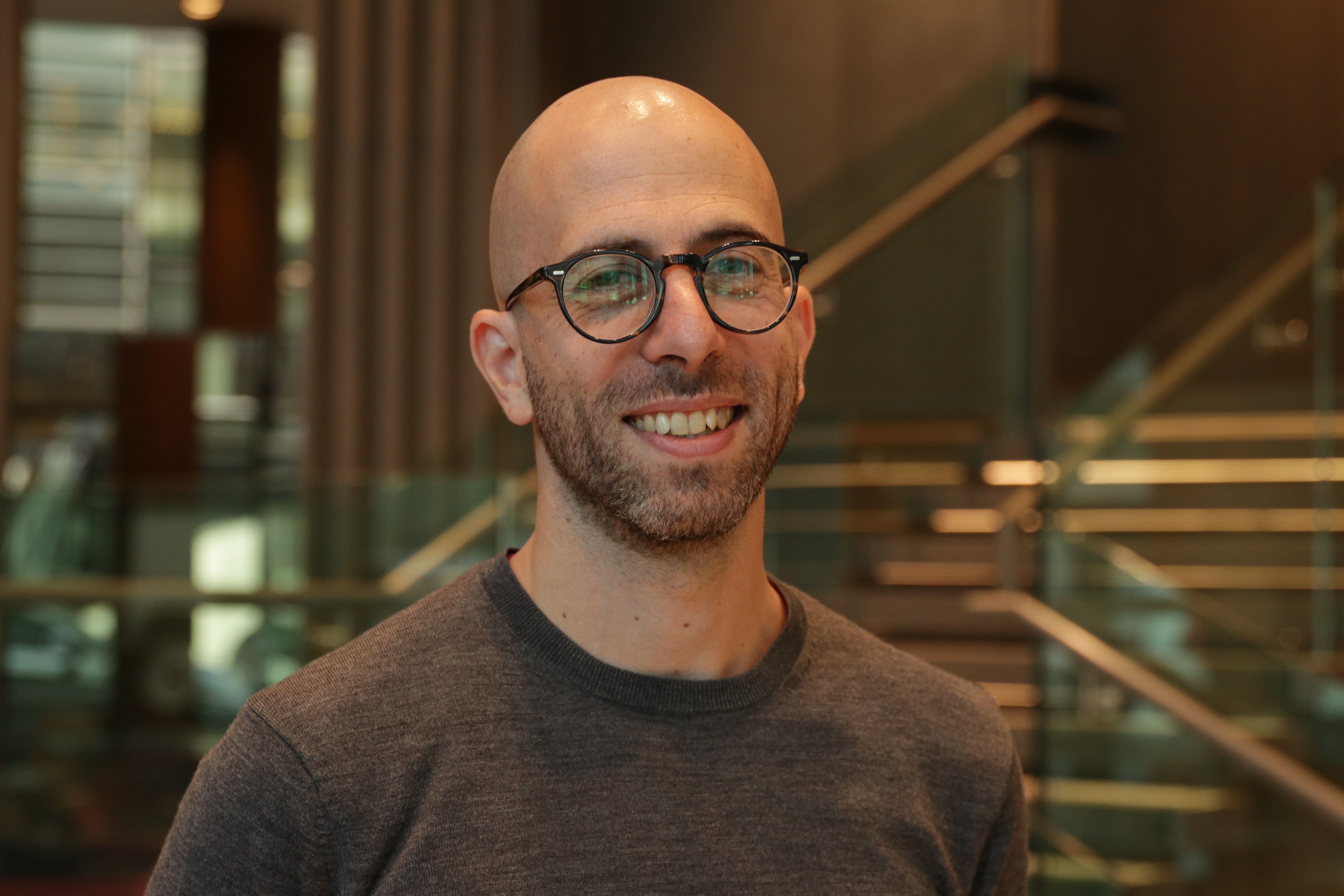
Published in a week when Lovable's valuation doubled to $13.3 billion, up from $6.6 billion in December, this episode presents Ryan Meadows' story of joining Lovable as a customer before becoming its Chief Revenue Officer, and how that experience shapes everything about how he thinks about AI, growth and the future of software. Hg's Tim Harrison sits down with Ryan to explore how they reached $400 million ARR in just 15 months, what it means to build an organisation entirely without legacy tooling, and why Ryan thinks most enterprises are still barely scratching the surface of what AI can do for their people.
Ryan walks through their three-stage model of AI transformation, from getting everyone to prototype, through hardening load-bearing applications, to ultimately rebuilding workflows from first principles. He shares how Lovable disrupted its own seat-based pricing model to move to consumption in the enterprise, and why that shift unlocked a customer who went from 200 product managers to 8,500 active builders in two months. He also reveals how they use their own platform to run go-to-market, from an AI command centre that tells reps exactly what to do, to a CPQ and e-signature flow built entirely in-house. As Ryan puts it, the company's tagline is "we want to be your co-founder," and he believes that applies just as much inside an enterprise as it does for a first-time founder raising funding.
Listen on:
Inside the episode
Lovable's AI transformation model has three stages: get everyone prototyping, harden the useful prototypes into load-bearing applications, then rebuild core workflows from first principles.
Moving from seat-based to consumption pricing let one customer scale from 200 product managers to 8,500 active builders in two months, a shift Ryan calls a short-term revenue hit that paid off in volume.
Lovable runs its own go-to-market entirely on its own product, including an AI command centre that tells reps what to do next, a live-call assistant, and an in-house CPQ and e-signature flow.
Ryan argues most non-technical employees still haven't built anything with AI, and that closing that gap matters more right now than perfecting workflows for teams that already have.
Episode transcript

Tim Harrison
Welcome to Orbit, the Hg podcast series where we talk to leaders and hear about how they've built some of the most successful technology companies in the world. Today, I'm delighted to be joined by Ryan Meadows, the Chief Revenue Officer of Lovable. Lovable is, by some measures, the fastest-growing software company in history, growing from zero to over $400 million ARR in roughly 15 months, and doing all that with only 150 people.
Many of our portfolio companies are customers of Lovable. Ryan, great to have you here. Thank you so much for joining us. Maybe as a start, it would be great if you could introduce yourself, but also tell us a little bit about the journey that brought you to Lovable.
Ryan Meadows
Sure. Yeah, well, happy to be here. Happy to have a new partner in Hg. Beautiful event here in Paris, nicely done. I'm Ryan Meadows, CRO at Lovable. We just got off stage talking about Lovable's growth over 17 months, from zero to 15 million users and $400 million ARR. Just this explosion of people building things.
Tim Harrison
And how has that been on your broader career journey in terms of roles in sales and go-to-market? What's been different about the last 17 months at Lovable?
Ryan Meadows
Well, actually the story goes that I was leading go-to-market at Klaviyo, where we had grown from $60 million to over $1.3 billion ARR while I was there. That's a really remarkable run in the SaaS world, rapid growth over six and a half years. We were doing so many new things, going into international markets, going up-market, adding new products, and our systems just didn't keep up with the pace of growth.
The team was pretty happy overall. Employee NPS would be 85, 90. Happy team. But there was always one question, three years in a row, that really kept me up at night, which was: do you have the systems to support your job? And we would score in the teens, which is pretty horrific for employee NPS. So I went on a journey to try to solve that.
I was clearly losing trust in the team. I tried POCs with all the big providers out there and couldn't quite get it right. And then eventually the HubSpot CEO mentioned Lovable. One Saturday morning, I went and built a whole new front end to our CRM, connected it with our data warehouse and put it to work the next week, doing an end-of-quarter deal review. It actually led to us closing two deals that we didn't think we were going to. Everyone has their AI moment. That was one for me. And it was a bit serendipitous that one of our founders' advisors called me that same week about Lovable. So I was a customer first. And that personifies what has changed. Systems don't get in the way. We build it all in Lovable. The rule is zero administrative work, so go spend time with customers.
Tim Harrison
It's interesting what you say there, as it resonates with what we're seeing with leaders across our portfolio. I sometimes refer to it as getting in the boiler room and actually using and playing with these tools, not only for work but also personally. You described it as your AI moment. I've heard one of our CEOs describe it as a penny-drop moment, and the goal being to create a cacophony of penny-drop moments across the company. It's interesting that that's what motivated the change for you.
Ryan Meadows
That's it. And now I just get to have a bunch of fun building it. We've done everything end to end built on Lovable, and sometimes that's perfect, sometimes it's a little bit painful. But it's worth it for us to feed that experience back to the product team.
Tim Harrison
And for a lot of our companies, you were in the room with them today, and they're thinking about what their agentic products look like and how they bring value to their end customers with AI. But obviously they're established leaders in the SaaS space. One of the things you mentioned at lunch was how it is to build without baggage. I'd love to explore that. Can you tell us about how engineering has worked at Lovable and how the product function evolved from its inception?
Ryan Meadows
Yeah, sure. Our product has been out for about 18 months now, and for the first 13 months we did not have a product organisation. And I think that sort of is the ethos behind Lovable. We're shipping 20 times a day. There's a feedback channel internally where everyone is expected to use the product and give feedback, and I've posted in there and been told 15 minutes later, "Done, it shipped."
We believe in getting engineering, and really everybody in the company, as close to the customer as possible. Now, as we've grown, we've also had to bring some maturity, because when you're trying to serve multiple markets, multiple regions, different ICPs, and you're exploring new frontiers, it really helps to have a product organisation that can organise that and make the right bets. But that doesn't take away from the fact that our engineers are excited to spend time with customers, and they do spend time with customers. We think that just shortens the entire SDLC.
Tim Harrison
Something I want to pick up on from your journey from Klaviyo into Lovable. Has there been anything you found frustrating or difficult working in an AI-native environment? Anything where you thought, I kind of miss the discipline or the maturity we had before. What's been the hardest bit?
Ryan Meadows
That's a fun question. We talked about not having baggage, and you can build things the way you want to build things, and that’s beautiful when you think about first principles. But there are also moments that keep me up at night. Do we really want to solve everything with first-principles thinking? Meaning, there's so much demand, so much opportunity. Are we really going to rethink the profile of that hire or how we create a customer experience, or should we just go?
Finding that right mix is really what I try to pride myself on. There are things that are just tried and true and will persist. It's still humans working with humans in many ways. Let's bring in those great skills and great playbooks, and find the right areas for first-principles thinking. We don't always get that balance right. Sometimes we should have built something from scratch, and sometimes we brought in a playbook when we shouldn't have. But finding that balance is really what I consider my job to be.
Tim Harrison
One of the questions we get from our portfolio companies when they're using tools like Lovable – one of the most powerful things there, I think is, you mentioned it again today, creating the entrepreneurs, creating the 10x-ers, democratising that ability to build beyond just the engineering and product organisation. Where do you think this ends up? When the finance team can build all the applications they want and the HR team can build all the applications they want, how do you scale that, govern that? Is it good to have everyone creating all these applications? I guess that's still evolving, but what have you seen as emerging good practices?
Ryan Meadows
Yeah, and maybe I'll scare some people with this comment. Not only can our software engineers ship at Lovable. Everyone in some way can ship, and quite a few people can actually touch the codebase, which is scary for a lot of organisations. We've put guardrails around that, as anyone would, but we deeply believe everyone should be a builder. We actually think better software, not just cheaper or faster but better software, is being created because the people who are actual experts with real taste for a given task are building it, whether it's agents or UI or whatever it is.
And so I think step one and let's see, I don't um, this is changing rapidly. But step one, and what we see with our customers is that they're qualifying what kind of build it is. And so go get everybody to prototype. That's your first step. That means you're going to explore a lot more ideas. You're going to see ideas that might have died because someone couldn't get it past somebody else in the hierarchy of the past. Prototype and experiment. From there, you start building things that didn't exist before. You prototype this dashboard – very simple – or your prototype this niche solution that nobody could build a SaaS business for, but it's really valuable for your specific business. The ones that are load-bearing, maybe they have a data source or they're used by many employees, you put those centrally into an innovation, AI or IT team. Harden it, make sure it passes governance, create the right controls, then send it back out to employees for the last-mile delivery.
Then eventually what happens is you reach what I think of as the third stage of maturity on this AI transformation, where you start just rebuilding things and you rebuild them from first principles. Why do we have that workflow? Why do we pay millions of dollars for software that nobody is using, or where we over-purchased on seats? And then all of sudden you’re starting to build completely for your business. That's where, in my opinion, real transformation happens. But the great start is get everybody to prototype. You'd be amazed at how creative your own employees are.
Tim Harrison
We've seen firsthand, and I'm always humbled by what our CTOs and leaders across our companies can now build. But honestly, one of the harder pieces we see in AI transformation is the operationalisation of those applications, the change management, the behaviour change that needs to happen across the organisation. Those are your customers. Are there ways you help them with that change management, that behaviour change, or even what you're seeing your leading customers do well?
Ryan Meadows
Well, you might actually be giving them too much credit. If you're not an engineer and you're not in a support team, what has AI given the masses? For the most part, it's a chatbot. I'm reminded of this all the time by heads of AI who say, "My non-technical employees refuse to use – fill in the blank." There's just not a lot of adoption happening. Where we are seeing adoption is in insights, but it's not really building things. It's not really replacing labour in a material way or creating workflows in an agentic way. Our whole mission is to democratise that and make it super approachable and east for non-technical employees to get in the game.
I think from there you can harden it. Most companies I speak to, and we can be in a bubble of software companies all deeply using the frontier models, but the reality is most non-technical employees in most of the world have still not actually built something. They haven't even built an agent. We need to break down that barrier first.
Shortly after that, though, you think about a customer that went from 200 product managers using Lovable to 8,500 employees. Surely the CIO and the CISO are going to wake up and say, hold on, there's a proliferation of builders now. Are they duplicating work? Is it safe? Is it secure? What data sources are coming in? Are you sharing secrets? That's where the governance of "safe vibe coding" comes in. Last year that was probably an oxymoron. This year it's a core focus for us. How do we actually give you all the controls so that you can feel really secure and safe doing this? And eventually that becomes a unified place for all of your internal applications, rather than individual departments having sprawl of their own tools across the SaaS era. We think there’s a great opportunity to bring that together.
Tim Harrison
The piece you mentioned there that I'd love to pick up on is how everyone’s building chatbots. We were actually discussing this with our CPOs here. When they're talking about agentic solutions they're building for their own customers, what is the future of UI and UX for that? I think there's a bit of a knee-jerk response in the industry right now, that if it's an AI feature it has to have a chatbot. But what the customer actually wants is the automation of a messy workflow, and the interface for that is going to be quite bespoke. Is there anything you're seeing on the Lovable side about how you think about the UI and UX of AI features?
Ryan Meadows
Absolutely. I think there's a spectrum here, and it's both maturity and time that are going to bring us across that spectrum. Today, the average employee absolutely prefers a UI. And it's not just that a chatbot. Because a chatbot – while it has memory – it’s not exactly easy to see what insights you've been getting over time. The reality is most jobs still require a core set of metrics, a core set of workflows, and somebody wants a UI to see how those are performing.
Then as you start to build agentic workflows and putting agents into the workflow, how are you training the agent? How do you know it's performing? For example, we've been building self-improving AI SDRs, but we need a human in the loop, certainly at the beginning. Once we've reached 90 or 95% approval, then we can let the agent go and keep repeating that. So I think that’s going to have to be in the loop. Eventually that will all fade but I think it’s going to take some time. But even when people are running all of these agents, how do you know what's actually happening. You're going to want something that sits above that.
Tim Harrison
The observability piece is critical. I've got to ask about AI SCRs and AI in go-to-market as the CRO is front of mind, and there’s a little dog-fooding, using your own product to build it. What are you seeing as the most impactful use cases of AI for growth, for growth, for go-to-market, for sales?
Ryan Meadows
There's quite a bit. Maybe the first insight is that when we were building our revenue operations team, the brilliant leader that we have actually came from a systems background. And so less of a strategy background, much more of a systems background. I think in many organisations, and some are already doing this, it probably makes sense to bifurcate and separate those roles, because the number one goal I gave her was “you’re gonna build all of this agentically and on Lovable”.
We’ve sort of gone down the list. The two most impactful so far have been our command centre. What this does is it sits on top of all our CRM data, our data warehouse, all our signals. Instead of logging into a CRM full of rows and columns, you log in and it just tells you what to do. "Tim, here's what I think you should do today." We have a play mode where you click play and it tells you, for this account. "Here's what you should do. Would you like me to do it?" You can disagree and it will give you a menu of options that we've curated as other things that you could do for that account. That keeps you super efficient and focused and you’re not scanning dashboards and 20 different signal tools to figure out what to do today.
That’s a pretty impactful one. We have a live assistant as well. We’ve trained a model to look for things happening in real time on a call, and in whisper mode it stays behind the scenes and guides you with the right content, whether that's a case study, a customer example, competitive intelligence, whatever's needed.
And then my personal favourite, because it’s fun and it's been painful in past roles, is CPQ and deal desk. ROI calculator to quote generator, all the way through to e-signature. I sign all Lovable contracts through a Lovable e-signature. It's fun because it was such a messy process of yesteryear and we’ve put a great app together for that. But there's tons more. Go-to-Market is fun too. But finance wants data visualisation. The most commonly used app at Lovable is actually our org chart, built by the HR team, which shows you the org structure but also what people are working on. We use it for performance reviews. I can gather all my transcripts and ask myself weekly: what am I messing up, what am I not good at, what could I do better?
Tim Harrison
It all comes back to being able to build from the ground up without the baggage. You mentioned metrics and KPIs, coming back to Lovable as a leading AI-native product, what metrics and KPIs are you tracking around customer adoption and engagement? What does good look like when you're selling Lovable into an enterprise?
Ryan Meadows
We have a variety of customer milestones, but number one is: are people building load-bearing things? That's our North Star for our customer success organisation. Of course it's great to get more people in the game and prompting and whatnot but the number one indicator of success is whether someone has built something load-bearing.
Tim Harrison
And how do you define load-bearing?
Ryan Meadows
It can be a bit subjective, and we do add that subjectivity to it, because a slide deck can be quite load-bearing if that’s your business, like a recruiting firm or consulting firm that makes a lot of sense. But for most customers, we're defining it as: it has a data source, and it's an application being used by multiple employees. If it has a data source and is used by multiple employees, it's touching a core system. It's becoming a core system. That's load-bearing software versus a prototype, which is great, and as I said is step one on the journey. But we want to get you to building real load-bearing software.
Tim Harrison
And I guess that's also when it gets stickier. They're actually using the apps they're building throughout the company.
Ryan Meadows
Exactly. It'll have a back end. All of a sudden you're using cloud, you're using our AI gateway. Because the other thing that's often missed in coding assistants and vibe coding is that everyone talks about, “Oh, I can build now for the first time, it’s faster and cheaper”, but you forget that you can also just build better software. Our AI gateway… it's not just Lovable that's AI-native. The apps you build are AI-native. You can use any frontier model you want to build that functionality directly within your app. That's a massive leap forward.
Tim Harrison
We're seeing that internally too, with folks not only building applications that automate their workflows, but actually being able to layer AI directly into those applications, and then the eye-opening moment of what that unlocks.
Ryan Meadows
Exactly.
Tim Harrison
One question that comes up for our CPOs and CTOs is that now they're building agentic products that automate complex workflows, how should they think about commercialising and pricing them? You've been on that journey over the last 18 months. What can you share from what you’ve seen on the front line around seat-based pricing, usage-based pricing, outcomes-based pricing, all those pieces coming together?
Ryan Meadows
Generally we've found great success in just getting the product in people's hands. What I mean by that is, I can't remember a time in the last 20 years where there's been so much experimentation happening, and people are willing to try if you make it really easy and affordable. Easy to sign up, easy to swipe a credit card. Getting people to try is a beautiful motion. Then there are obviously a variety of tactics to get them to stick.
One of the journeys that we went on is as we went into the enterprise, our competition and the entire enterprise was all seat based. Part of the reason was that prototyping was adopted by product managers, who were heavy power users. They didn't want to think about credits. They just wanted to build prototypes. But then when you start to spread across the business – and we can charge hundreds of dollars per month per seat for that use case – all of a sudden someone in finance wants to build a dashboard once and then go away for two months. Someone in sales wants to build a slide deck or a command centre and then goes away for a month before they come back. The maths doesn't math. And when you start to think about agents using it, the maths really doesn't math.
So we completely disrupted ourselves going into this year. We flipped our seat-based model in the enterprise and went to consumption. We said every single employee gets access. And we saw beautiful things happen. That's the customer I was referring to, who had 200 product managers. They did a hackathon, 2,000 people showed up. We went, wow, it's not just product managers. Two months later, 8,500 people in their company were using Lovable. So it was a short-term hit. But now that 8,500 people are using it, we've seen consumption outpace what seat pricing would have been.
Tim Harrison
And is it an easy conversation to have with the customer? I can imagine talking to the CFO when they ask, what do I need to budget for? How do you handle that?
Ryan Meadows
I've been pleasantly surprised. About 60 to 70% of the time now, you have a procurement team and a CFO that are getting very comfortable with consumption. Because they're also having these conversations for their own business most likely. That's changed rapidly. Back in December and January, we found only about 30 to 40% of the time would they be friendly to open to going into consumption. By March, over 90% were on our consumption pricing.
We're still giving them the option if they're really worried about it. You get the issues like predictability. You hear stories about CTOs blowing through token budgets. So we try to get in front of that. We'll actually help you calculate upfront, and break it back down not to total spend but to what you're actually getting. When people see in Lovable that a slide deck costs $1.50 versus ten hours of a marketing team's time at $100 an hour, that's $1,000 versus a dollar. Or when you build an app that you were quoted $500,000 or $1 million for, and you built it in Lovable for $75. If you can break it down to those kinds of outcomes and pricing, it's really hard to resist.
Tim Harrison
Thinking about change in performance and the differential there, we've been through a quarter or so where the frontier models continue to improve at an increasing pace, with models like Claude 4.5, Codex, GPT. How much does that impact what's possible at Lovable? Is it as simple as upgrading to the latest model and the applications get better, or is it more nuanced than that? How do your engineering teams think about it?
Ryan Meadows
We have amazing partners in OpenAI, Anthropic, Google, and others who are often powering a lot of what Lovable does. There’s a couple of relevant things there. They're great at getting us new models in advance. We do really thorough evals, help them make sure the models will work well for our use cases, and partner with them on that.
With that said, each model is starting to develop its own personality. One might be really great for deep reasoning, another might be great for code gen, and so on. We sit above those and make smart decisions about which model to use for each task to get the best customer output. We're a super opinionated stack. You don't show up to Lovable and choose your model. We make those choices for you, because we do all the hard work to figure out what the best output looks like.
Tim Harrison
There's almost like a triage layer on top, where you take the task and work out which model is best for the job.
Ryan Meadows
That's it, exactly. And we mix in our own knowledge. I think we have more app-building prompt data than anybody in the world. We want to share a lot of that back with our partners and the frontier models. The better they can build, the better it's going to be for our customers.
Tim Harrison
One question I always like to end on: what are you most excited about with AI and the pace of change for Lovable in the next 12 months? With the caveat that we've just talked about your 18-month journey from zero to $400 million, so 12 months really is a very long time.
Ryan Meadows
I definitely don't try to predict more than a quarter, maybe two quarters out right now. Might make me look foolish. But a couple of things. One is the unique privilege of seeing millions of entrepreneurs being created every quarter. I'm an optimist when it comes to this market. I clearly see any knowledge-work job loss offset by the explosion of entrepreneurship. I was just with a customer who got $3 million in funding on a product built entirely in Lovable. They're making real money. They’re doing super well. Those kinds of stories get me really excited.
Then what we're focused on is we've been great to help them build the product. We want to be great to help them grow. And so you'll see us, you know, we just launched Lovable Payments and you'll see us continue to invest in helping entrepreneurs.
But then what happens is… entrepreneurship isn't just a job or a role. It's a spirit that you can carry. There are a lot of people who wish they could build things who happen to sit within a large organisation. What I’m most excited about in the next 12 months is - we talked earlier about how most knowledge workers who aren't engineers have just been given a chatbot. We can do better. We want to democratise their ability to build, while also making sure it's safe and governed and that the CIO and CISO feel great about it. So you'll see us directionally go into how do we make sure entrepreneurs can grow, and then how do we make sure, you know, employees of an enterprise have a safe environment where they can actually get stuff done?
Tim Harrison
Amazing. I like that idea of the entrepreneurs within an organisation. We've been thinking a lot about how we enable the employees of our portfolio companies, thinking about our 10x-ers being unlocked by tools like Lovable. And often it is folks who've been experimenting at home, bringing that curiosity into the workplace, using the tools provided with the right guardrails, and doing things that honestly, 12 months ago, we wouldn't have thought possible.
Ryan Meadows
So our tagline is we want to be your co-founder. People tend to think that must only be for founders. I think it absolutely works in the enterprise as well.
Tim Harrison
With that, Ryan, I want to thank you very much for being with us today.
Ryan Meadows
Thanks for having me.
The views and opinions expressed in this podcast and transcript are those of the contributor and should not be taken to represent the views or positions of Hg or its affiliates.
Statements contained in this podcast and transcript are based on current expectations or estimates and are subject to a number of risks and uncertainties. Actual results, performance, prospects or opportunities could differ materially from those expressed in or implied by these statements and you should not place any undue reliance on these statements.
Orbit episodes
Orbit Podcast
The rogue agent problem: A conversation with Gil Elbaz at the Hg Digital Summit
Episode details
Orbit Podcast
Patrick Debois on why context is the new code: a conversation from the Hg Digital Summit
Episode details
Orbit Podcast
Marjorie Janiewicz of Mistral AI: flipping the adoption curve - why SaaS with data can win in an AI world
Episode details
Orbit Podcast
The race for alpha: Varun Anand of Clay on inventing a new role and why GTM needs a new AI strategy
Episode details
Orbit Podcast
Everything, everywhere, but not all at once: Matthew Brockman on what's really happening in software right now
Episode details
Orbit Podcast
A certain level of chaos is healthy: Franz Faerber on fighting bureaucracy and the importance of deep domain knowledge in AI
Episode details
Orbit Podcast
The corporate immune system: Google Cloud's Daniël Rood on building Europe's first AI team
Episode details
Orbit Podcast
Skin in the game: Professor Neil Lawrence on vulnerability, accountability and why the next generation will thrive.
Episode details
Orbit Podcast
The 3 speed problem: Oji Udezue on CPO leadership in the age of unlimited engineering
Episode details
Orbit Podcast
Fevered determination: Building Zalos from zero to enterprise in 5 weeks
Episode details
Orbit Podcast
Trust, velocity, and building the Answer Engine: Dmitry Shevelenko of Perplexity speaks to Farouk Hussein
Episode details
Orbit Podcast
The long road to the last mile: Nic Humphries and Matthew Brockman reflect on 25 years of Hg
Episode details
Orbit Podcast
AI, Control Points, and the Next Wave of Vertical SaaS with Tidemark Capital founder, Dave Yuan
Episode details
Orbit Podcast
A glimpse of the next generation: Zoe Zhao and Annalise Dragic of Azlin Software
Episode details

Orbit Podcast
The business case for AI: Brent Hayward of Salesforce, David Carmona of Microsoft & Nagraj Kashyap of Touring Capital
Episode details
Orbit Podcast
Mastering the billion-dollar software playbook: Joe Lonsdale of 8VC & Eric Poirier of Addepar
Episode details
Orbit Podcast