Orbit 53
The 3 speed problem: Oji Udezue on CPO leadership in the age of unlimited engineering
Product Mind Principal Oji Udezue - veteran of Microsoft, Twitter, Atlassian, Calendly, and Typeform - offers an energising vision of product leadership in the AI era to Jason Richards, Head of Portfolio technology at Hg. Drawing from 25 years building products, Udezue reveals that it isn't something to fear but an opportunity for those willing to embrace what he calls "self-erasure": shedding old mental models to approach new technology with fresh eyes.
His journey from Microsoft's competitive trenches to discovering that "permanent influence has nothing to do with convincing people I was smart" unlocks why curiosity and vulnerability now matter more than ever. Udezue introduces the "three speed problem": his framework showing that while engineering capacity approaches infinity over the next decade, the real leverage comes from accelerating product divination and go-to-market to their theoretical limits. With characteristic wisdom, he advocates for "healthy paranoia" about change while championing extreme experimentation, prototyping over PRDs, and designing with customers as core team members. His closing mantra: "I happen to the world; the world doesn't happen to me" captures the determined optimism required to build jewel-like software in an era of unlimited possibility.
Listen on:
Inside the episode
AI-assisted coding is pushing engineering velocity toward 5 to 10x over the next decade, but product discovery and go-to-market cannot accelerate at the same rate. This creates a ‘three speed problem’ where the build function outpaces the organisation’s ability to decide what to build and how to sell it.
The biggest career lesson from 25 years across Microsoft, Twitter, Atlassian and Calendly: permanent influence has nothing to do with proving you are smart. It requires ‘self-erasure’, shedding old mental models and approaching new technology with fresh eyes.
CEOs are already bypassing product teams entirely by using AI tools to code features, pre-sell them with the CRO and ship without product sign-off. This is not a future scenario. It is happening now, and product leaders who cannot match that velocity will be sidelined.
The new CPO mandate is to make customer feedback so turnkey that discovery keeps pace with build: aggregate every channel into one pool, use AI to synthesise insights in real time, and treat prototypes as the new PRD so that engineering capacity is never the bottleneck again.
Episode transcript
Jason Richards
Welcome to Orbit, the Hg podcast series where we talk to successful leaders of technology businesses and hear how they've built some of the most successful software companies across the world. I'm Jason Richards, head of Portfolio Technology at Hg, and I'm delighted to be joined by Oji Udezue, principal at Product Mind, and one of the most experienced product executives in the technology industry. Hey Oji, good to see You.
Oji Udezue
Hi, Jason. It is good to be here with you as well.
Jason Richards
Yeah, fantastic. You've joined us here today in New York for our CPO AI Summit. Mm-hmm. If you don't mind, I've jumped straight into some questions for you. I think our listeners would be really keen to, to hear from you. Uh, you've had an extraordinary journey through summer tech's most influential companies, so Microsoft, Twitter, Atlassian, Calendly, and Typeform. So looking back, was there any kind of pivotal moments or decisions that fundamentally shaped how you think about and practice product leadership?
Oji Udezue
You know, I, I've been a product manager since day one. I got out of grad school, you know, with a degree in computer science and electrical engineering. And I wasn't always the best developer, I don't think. But I had a gift for thinking about a future, about leadership, about persuasion, and I decided to throw my head into ring for become a product manager.
And the most important thing is I've had to learn different skills at different times. You know, Microsoft was really good technology company. I have like 14 patents. So in those days we used to invent our way out of problems, uh, because there was nothing else to do. There was no solutions, there was no open source or anything like that.
But I think as I became, you know, say climbing the ranks, I had to sort of add on new skills on how to build companies. So I said to diversify. So because, you know, product touches everything. I learned to be a great marketer. I learned to how to fill the sales pipeline. I learned to lead and be think about through design. Think about engineering. Fortunately, I'm an engineer. Well, maybe the most important evolution was leadership. You know, how to not do personally, but to do through people, to inspire them, to lead them.
All in all, it's just, I'm really besotted with the idea of building things that people use and make, give them superpowers that makes their lives better through technology. And it's sort of weird to say that, but I've always been fascinated by that process and I still enjoy being a builder in power. Yeah. Yeah.
Jason Richards
And it may be touching on a little bit about the sort of the leadership aspect you referred to, but in addition to the skills that you learned and developed along the way, is there anything that's sort of naturally, innately behaviourally is, you know, what you think is important from you and from your perspective that's aligned you well to product management? Product leadership?
Oji Udezue
Yeah. I am eclectic as a person, uh, and quick multiple skill sets. And that aligns very well with product management. I think a good product manager is a good engineer, is a good designer. They know how to tell stories. They know how to persuade. They have to be a little bit of an anthropologist, a psychologist, a behavioural economist.
You have to, so there's such an integrative, uh, job and their hard skills and their soft skills. And my own particular mean is to, you know, I you know, that eclecticness just fits the sort of stuff that I love. Yeah. I like to draw on all these different skill sets. Yeah. You know, 'cause in many ways I, my brain gravitates to so many kinds of these things and, and my own particular intelligence is integrative and conceptual. And so I think that's what makes me a good product manager.
Jason Richards
Yeah. I mean, today we spent quite a lot of time and so we were talking about the behaviours required in the AI era. Mm-hmm. We were talking about curiosity and empathy. Yeah. But I mean, to me it's sort of, I'm not sure. They're just only relevant for the AI era. Right? Yeah. So are they attributes and skills that you found important throughout your career and maybe are now emphasized?
Oji Udezue
Yeah. I like to tell a story. When I first got to Microsoft in the early days, and I was just a pm it was like a very competitive environment. They pitted us against each other. I dunno if you've ever heard about the stack ranking system. And these were some of the most intelligent people from across the world. I came, I was born in Nigeria, and the people from Russia, people from Poland all over the world, some of the smartest people who had never failed their entire life were in the trenches with me, trying to be the best, trying to get the best bonuses, trying to have the biggest impact on windows or whatever product they were in. And so it felt like the cough, a lot of the flies for intelligent people.
But I remember having a very specific epiphany maybe like two or three years into my time at Microsoft, where I realized that permanent influence and impact had nothing to do with convincing people. I was smart. But actually speaking to people's motivations, the heart of people, you know, really affecting the way they felt.
And I think that was the first epiphany. And I think the second epiphany was, uh, more diffused. But I, I memory realize it by saying something, which is there's more intelligence and more knowledge outside my brain than inside it. And so if you combine those things, things together, it's just made me, it's easy for me to say, to be, to ask a stupid question. Yeah. I don't feel particularly bad about it. I'm not competing with anybody for anything. I know how lethal I am when I understand something. So I always try to put myself in a place where I'm always learning. Yeah. Yeah.
Jason Richards
Very interesting. The, I think the audience really today loved your perspective on how the CPO role is transforming in the, in the AI era. Um, so how would you summarize for our listeners the view, you know, what you view as these critical changes? You know, how is the role evolving and why?
Oji Udezue
Yeah. I talked about a few, a lot of things, but maybe I'll go through maybe two particular concepts. Technology is always rebuilding constantly. Because workflow stay the same. The market, the marketing job or the marketing workflow is about creating demand and, and about communication. And it was through in the 19 hundreds, and it is through in 2025. And what changes is the tool set we apply, and the tool set is always influenced by the technology level.
So either technology level changes, sort of resets the playing field. This is why the young people are into ai. They think natively about this stuff. And the old fuddy dud, like, you know, technically me, right? We, we sort of encumbered by what came before. Yeah. And so if you want be a fuddy duddy that wins, you have sort of do a self erase a little bit. Right?
And so, there's a lot about knowing that the game has changed and there's a reset. I call it the great replacement. Um, I'm learning all new skills. I'm playing with models, foundational models, local models, building GPU Box to, and figuring out what the quantization is and all these things. We should be that curious. Everyone should be that curious. Um, the Lego blocks have changed entirely.
But I don't, I think for people like me, seeing these discontinuous have happened in the past actually gives us some wisdom that people who are starting from scratch don't have. And so the question is how do we collaborate with them to build amazing new things? Yeah. Yeah. Replace the same workflow with even better technology. If quantum computing becomes a, a real thing, we'll have to relearn everything over again. But that's fun. Yeah.
Jason Richards
That reset is quite interesting. Right. I imagine it requires some bravery, some vulnerability, that kind of stuff. I mean, so if you've been around for a while and you used to doing your thing Yeah. But you need to be successful. Being brave enough to transform yourself is pretty
Oji Udezue
Interesting thing to do. The thing I bring to it is a pattern matching, but I'm excited about the newness. And I think that if you wanna succeed, you have to be excited about the newness. You know, there's, you know, some Holy Book talks about approaching things with a mind of children, and I think that that's sort of like what people have to do. Yeah.
Jason Richards
One of the things that stuck with me when we were talking about, I, I think there were three cool things you said that, you know, the, the CPO has to think about, one of them was the CEO whisperer and stuff like that. Mm-hmm. Yeah. I mean they were really cool. I wonder if you could talk to us a couple minutes about those.
Oji Udezue
Yeah, yeah. I've learned the hard way that being an elite product leader is not easy at all because you have too many jobs. And A CFO can just be a CFO. What are the numbers? How much can you spend? What are the financial controls? Sales leader can do the same thing. Like, okay, enable your people, build sales tools, sales ops, whatever.
But if you are the product, the product is the lifeblood of anything. Not the sales of it, but the product providing value. And so you get hit from every angle. You don't just lead the product team. You also shadow lead engineering team, shadow lead the marketing team. Everything hits you. And it's both accolade actually. Sometimes there is no accolade and blame and you not only have to build the product through people, you have to build the operating system of the people and how they integrate with each other. You have to earn the trust of your CEO. Right. And because for them, if there's fairly their founder, the product is their baby, they don't wanna let go. They want to, they don't even wanna give it to their wife. Talk less of you. Yeah. If that makes any sense. Yeah. Yeah. Yeah.
And then finally you have an accolade of C-Suite people who either wanna love you or hate you or blame you or anything like that. So you have to pay attention to these four, these three things like building the product, building the team, uh, earning trust with your CEO, being their trusted advisor and being an anchor for the rest of the C-suite. Yeah. And uh, each of these things is a full-time job.
And so a product CPO who doesn't understand is the worst thing is not understanding. You have three jobs, you think you have one. If you think you have one, you've already failed. And then second thing is understanding that you have three. And then finding the time allocation to spend on those three and getting the leverage you need to help you with those three. Even that is hard too, but least the second situation is better than the first.
Jason Richards
Yeah. Just switching gears slightly. So we were talking a lot about supercharging product engineering. So you know, increasing product engineering capacity, speed through leveraging sort of AI agent tooling and stuff like that. I guess one of the worries we have is product management lagging and sort of flipping the traditional funnel as it were. Mm-hmm. Mm-hmm. Where, you know, in the past, constraints were probably around engineering capacity and speed and product management was working out how to deal with that. So, you know, creating backlogs and all that kind of stuff, with the supercharging effect we're seeing and almost this move to unlimited engineering capacity and speed. What does that mean to product management? I mean, is there, you know, this risk of a bottleneck, what, what do we need to do? What do we need to think about?
Oji Udezue
Yeah, there's, well first of all, this is unprecedented territory. Like we've actually never, it's like what will the planet do when there's unlimited energy and we have fusion energy everywhere. We have no map for this, and this is the fusion energy moment for a product.
And so I can only speculate and use pattern matching to figure out what to do next. I think what you have on, by the way, you know, most people are actually living unlimited engineering, that it doesn't feel real to them yet. I think this will emerge over the next like 1, 2, 3, 4, 5 years. Yeah. At a 10 year mark, you'll have total agentic coating. Right now we have human assisted coating, if that makes any sense.
So the question is, when you have unlimited capacity, what do you do with it? And my best supposition is that will use some of it to be more ambitious. We've had the last 10 years where people picked tiny ambitions. You know, I'm gonna do, uh, this tiny stack of marketing, this tiny stack of accounting and someone else is gonna do the other assassin, this other tiny slice of it. And you have what I, the Cambrian explosion of SaaS because everyone is unbundling tiny things. And then when they get successful and hit a million or a hundred million in revenue, they're like, okay, we'll add this other workflow. And they start to expand, you know, multi-product companies in unlimited engineering, unlimited code generation. People will become more ambitious. They will build just more ambitious desktop OSS for product and so on and so forth. Just do more people will spend it on refinement. Right. How do you produce, you know, apple creates a very refined product and they take a long time to do that. And then you just make incremental advances. People will create more jewel like delightful software. Yeah. Versus this kind of dumb MVP completely rough stuff we throw out in the SaaS era.
People will use it to sort of rethink the entire stack. Like people might be running two or three stacks. 'cause tech deck is technically erased in an infinite thing. Like you just like, okay, we have a microservices, we have a monolith. We'll see which one works the best. So that people will have multiple stacks, multiple ways to produce something. And then some people will limit the capacity themselves. Yeah. If something's no longer the bottleneck, then technically you can dial speed at whatever you want. Yeah. Or whatever ambition that makes sense to you.
And so I think this is the world that we are entering. It's unclear which will be dominant or if there'll be anything dominant. Uh, when you have all limited resources, it's really about wisdom. It's about direction, it's about understanding and judgment. And I think those are the things that are the actual bailiwick of product. And so judgment will become a premium. How do we point it? Where do we aim it? What do we do with it? And the speed that makes sense to us.
Jason Richards
I suppose there's also the angle of what makes sense to the customers.
Oji Udezue
That's correct. Like customers have, there's a theoretical limit of their absorption rate. Uh, we're designing for in 2025 for distracted brains. It's like throwing unlimited food at a person, you know, they become useless eventually they can't do it. So that will be a natural limit to engineering speed. Yeah.
Jason Richards
And the whole, I think let's do, we talk then about how to leverage that capacity, how to leverage that speed. You talked about the three speed issue. Yes. When we think about that value chain, so from product management, engineering, go to market, that whole ecosystem, I wonder if you could just share with us a little bit about that. Yeah, yeah. What does that mean? Right. And, and how should we think about that?
Oji Udezue
Yeah. The three speed problem is the fact that there are three parts of building valuable technology companies. One is a product process, which is essentially customer divination, market divination. The combination of customer understanding, market understanding and saying what will win the market. The middle is the building, which is engineering capacity. And the last one is a go to market.
And for the longest time, this middle thing has been constrained and is now fixing to be completely unconstrained. And so over the next decade, what product people have to do, marketers have to do is to maximize the speed. These, these two things, which is, uh, customer understanding, market understanding, ideation, solutioning, and go to market have to be sped up to their theoretical limits. This thing will be unlimited in the middle, but if you can speed this things up to their theoretical, 'cause we're very lossy, we're very slow because we make excuses, but also they're actual external customers who don't control in those two processes. We will never catch up to this thing. We will take it for granted as infinite, not over we two years, but over 10 years, we speed the stuff up the two sides of this to a theoretical limit.
Again, there'll be a limiting factor because it requires humans and judgment. And then that will be the new level for the new agile, the new SDLC. And that's when we'll know there's a balance when we figure out how to speed this up. Yeah. And, uh, that has to be controlled by customers on one side, product people and their judgment and decision making on the other side. And, uh, it's just that they're not fast enough yet. They haven't read the theoretical, so we need to find it. Yeah.
Jason Richards
Nothing we talked about today is the benefits of prototyping and, and certainly rapid prototyping now. And sort of as, as an aspect of that, this ability to trial, experiment, fail and, and you know, maybe out of 10 things pick two, but you know, they're the two that are gonna really work and, and double down on those. During your career, has there been anything that sort of, any sort of fail kind of situations that have shaped the way you think, the way you behave,
Oji Udezue
Fail situations? Yeah. Have I failed? Have you failed anything ever? Yes. No, I failed a lot. It has been a while since I've been, uh, like, you know, senior principal pm but you know, there are features that I've built in the past that didn't quite hit our exit, um, criteria.
I can think of like, you know, I was, I was one of the people who was tasked to go build ad funded windows. Like we were trying to figure out if we could make parts of Windows free. We had like, you know, and then I built a system basically I built an entire ad system, bolted it on desktop software to see if we could make it free and see if it would work. And it failed miserably. It wasn't entirely my fault. I think we built it on search APIs at the time, Bing APIs. Uh, but yeah, there have been some ill-conceived stuff, um, that didn't quite make it.
I've had some successes, but actually when I think about the last 10 years, 'cause I've been a park manager for 25 years, it's mostly around people that have made mistakes. When I have had a gut sense that someone wasn't good enough and I took six months to move when I didn't hire fast enough to help myself do the three jobs, and I got stuck doing one because I was capacity constrained, when I hired the wrong person outright. Right. Those are probably the most expensive mistakes that founders and CPOs will make is people, 'cause that it requires, you know, Google mentioned, you know, there's a vaunted Google interview method, you know, you know that they do. And they did a retrospective and they found that it was 50% was a coin toss after spending millions and millions of dollars trying to hire in the Google way coin to Wow. So people, mistakes are very, they're very common.
And I think that if you are CPO, and in my case, if you figure out how to get your odds up to like 60, 70%, that's, that's, that's plenty. Yeah.
Jason Richards
With this power and speed that we have that's available now in emerging, do you think the the risk of failure increases or, and should we be worried about that
Oji Udezue
Feature failure? I think people failure might still happen, right? Although as we start to blend humans and agents, who knows, maybe we will get better, which is sort of sad. And I don't know, there's some societal impacts of that that i, we have to untangle.
But I think feature failure, I think actually more than 70% of features fail. And you can tell this by, because most, in most software people value only like 20%. So I think that will continue because I don't think we, we make those failures because of engineering. I think we make those failures because of lack of customer understanding. Mm-hmm. And we've been talking about customer discovery for a decade, 15 years, and people still make mistakes because it turns out mind reading your customers is very, very difficult because, you know, we're human.
Uh, I think the one thing that can help that and increase the hit hit rate is extreme experimentation. Uh, we talked about one version of that, which is no more PRDs, we do prototype applications. So imagine you built a prototype app application even before it went into engineering and tested it with a few customers. So you could tell which PRD prototype to pass to engineering, not the full product. And then engineering does more iteration because code is cheap and creates another five prototypes based on the one that won.
And that way you're doing sort of this extreme customer vetting in the product process versus, you know, the pathway we did that was you sort of build some experimentation, take a long time to validate where you only test at the end. Yeah. So you only have like maybe one or two tests at the end, but now you have 10, 20 tests that have touched real customers who are willing to begin to, because customers, a lot of customers, depending on your product, if you're an enterprise, maybe not, but a lot of customers want to give you advice. Yeah. They want to give you the basis of their judgment.
If we can do that, basically design with customers as part of our process, I think that we'll end up actually like making fewer mistakes. 'cause
Jason Richards
So you're bringing those iterations in upfront. Yes.
Oji Udezue
You, you're basically making, making your customer part of the product team. Yeah. Yeah. Like, how do we do that efficiently? I think it's been very difficult to do that. All these customer panels that talk to you every month or two don't really work. But if you find a way to bring customers into the core process, customers who are willing to be part of that process, whether compensated or not, I think we'll make fewer mistakes basically. Yeah.
Jason Richards
I've got a close in three quick fire questions for you, if that's okay? Mm-hmm. So first of all, at the end of your section today, you concluded with just determined to be great. Mm-hmm. Please explain that.
Oji Udezue
Wow. I think a lot of success in your career or your goals is about imagining your success and then being prepared to work hard for it. You have to visualize it, you have to see it in your brain. You have to see yourself waking up every day to be successful.
Uh, I'm not big on like psychology mumbo jumbo and all this manifesting stuff, but it's truth to saying that what you see and point at yourself can often become reality. Mm-hmm. And so when I ask people to be great, I just want 'em to make a decision that they will be superheroes, they will drive real transformation and, and back it up with waking up at the right time, working hard and working smart.
Jason Richards
So that encouragement, I guess, of have some self-confidence be self-assured without it becoming an ego kind of issue. Yeah.
Oji Udezue
I think you got, you gotta be sort of leading from the front, right. I think that needs a certain attribute of, I'm confident I know I can do this. I I'm gonna make this happen. That's true. And, you know, this sort of stuff comes to me naturally and I, I love the way you just put it, but one of my mantras is that I happen to the world. The world doesn't happen to me. Mm-hmm. And I think that's what I'm trying to communicate when I say that. Yeah.
Jason Richards
Very good. Question number two, it was great to have you throughout the whole session today. So were there any other topics that really stood out to you? I mean, we asked you to focus specifically on the evolution of the role of the CPO in the AI era. Mm-hmm. Mm-hmm. But I mean, you're, you are present all day. So anything that stood out to you with all the other topics and great speakers we had.
Oji Udezue
The thing that I love with hanging out with CPOs is that, you know, it's like every single product organization is like a lab, right? There are different variations of things happening within them. And so what I'm listening for is how is that guy solving this problem? How is that guy solving this problem? Are there ways I can generalize the solutions that I've encountered to someone else's entirely vertical, different hardware, software, combination product organization?
And so I think the thing that I enjoyed the most was people talking about solutions that they've come up with for unique problems. People talking about the problems they've had and things that they've tried. The way my brain works is system thinking, uh, coming up with frameworks that are original, uh, thinking about, oh wait, they solved it this way. They solve it that way, but that fits this way and that fits that way.
And so I think, uh, the way my brain works, I was just collecting those systems, those solutions, and my brain starts to work on thinking, oh wait, is there a way to think about this in a more holistic way? And so, yeah, I, I learned a lot just by listening.
Jason Richards
Well, like you said earlier, it's that listening assimilation collection of information and then processing.
Oji Udezue
Yes, that's right. And so for the next two days or three days, I'm gonna have sleepless nights. 'cause I'll be thinking about this stuff picking Up at four in the morning.
Jason Richards
This was our inaugural, this was, this was the first CPO dedicated summit that we did. So any sort of just general observations from, from being with us today.
Oji Udezue
I think on the plus side, uh, I see a huge willingness to change, a huge willingness to change and learn. That's what I see on the minus side. Like I wonder how much paranoia people have genuine paranoia about we're going to, we're all gonna be hit by a freight train, basically, of change.
And, you know, part of what I want to do is help prepare people for that change to people who are willing to listen. But I know that not everyone feels the same urgency all the time. No one feels that, uh, gro um, power. In fact, sometimes I'm paranoid by would I'm empower it enough, right. And how do I communicate that?
So, I think it was a great thing. The thing that I would love for you guys to do is to scale the paranoia, scale the change, uh, into these portfolio companies. But, you know, look, I spend a lot of my time scaling this paranoia to regular people, to startups I already work with, to help prepare them for change or failure, success, whatever that is.
Jason Richards
So, so did you say you're paranoid about maybe not being paranoid?
Oji Udezue
Correct. Very good. Very good.
Jason Richards
Oji it's been great speaking with you and it's fantastic having with us today. And as I said, you know, the whole audience really enjoyed it. So thank you very much.
Oji Udezue
Appreciate it. Thank you. Thank you, Jason. We had a good time.
Orbit episodes
Orbit Podcast
Marjorie Janiewicz of Mistral AI: flipping the adoption curve - why SaaS with data can win in an AI world
Episode details
Orbit Podcast
The race for alpha: Varun Anand of Clay on inventing a new role and why GTM needs a new AI strategy
Episode details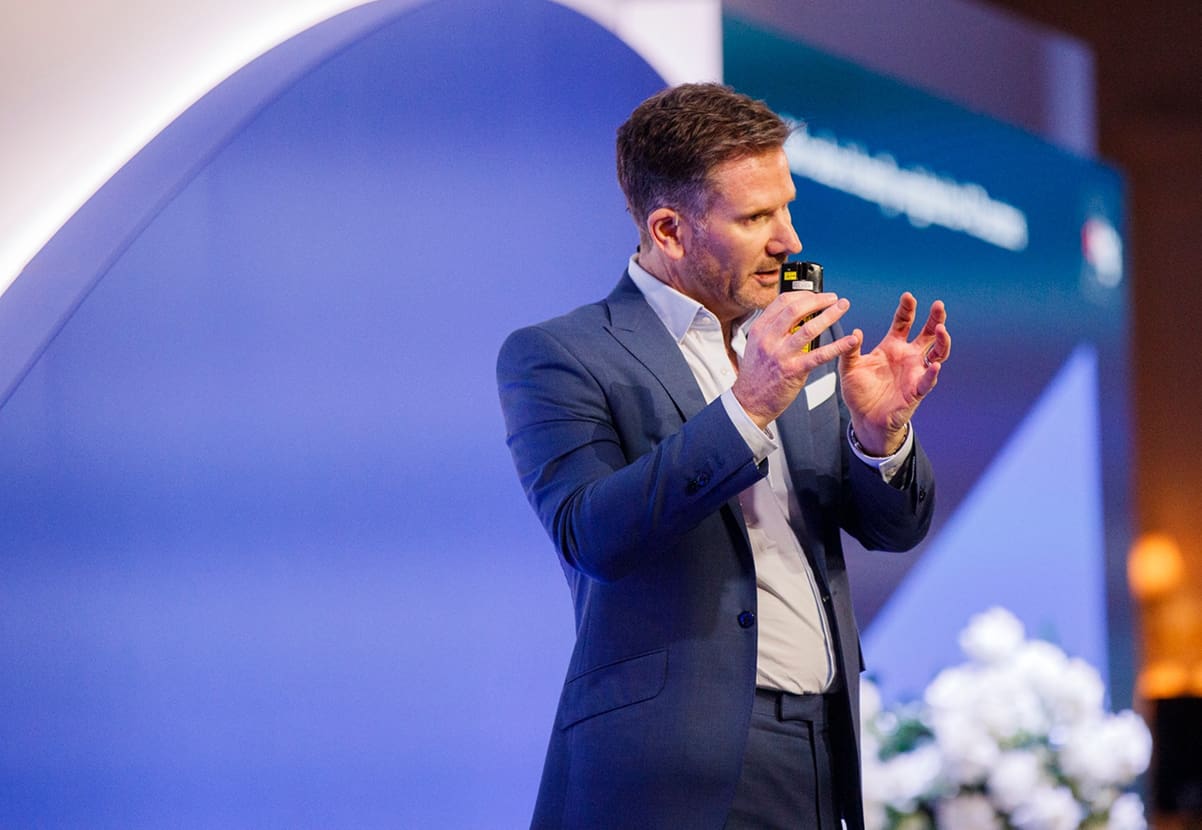
Orbit Podcast
Everything, everywhere, but not all at once: Matthew Brockman on what's really happening in software right now
Episode details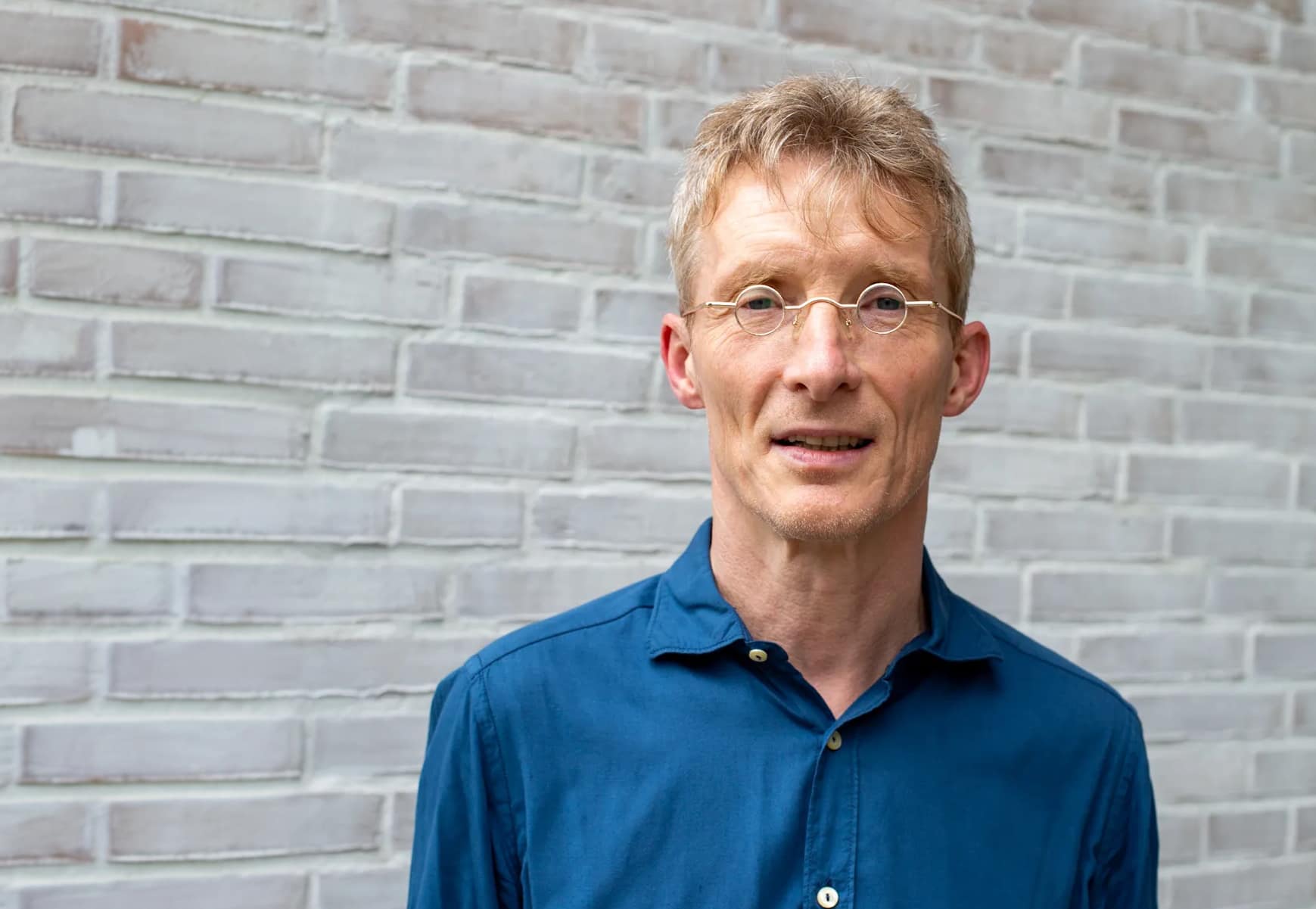
Orbit Podcast
A certain level of chaos is healthy: Franz Faerber on fighting bureaucracy and the importance of deep domain knowledge in AI
Episode details
Orbit Podcast
The corporate immune system: Google Cloud's Daniël Rood on building Europe's first AI team
Episode details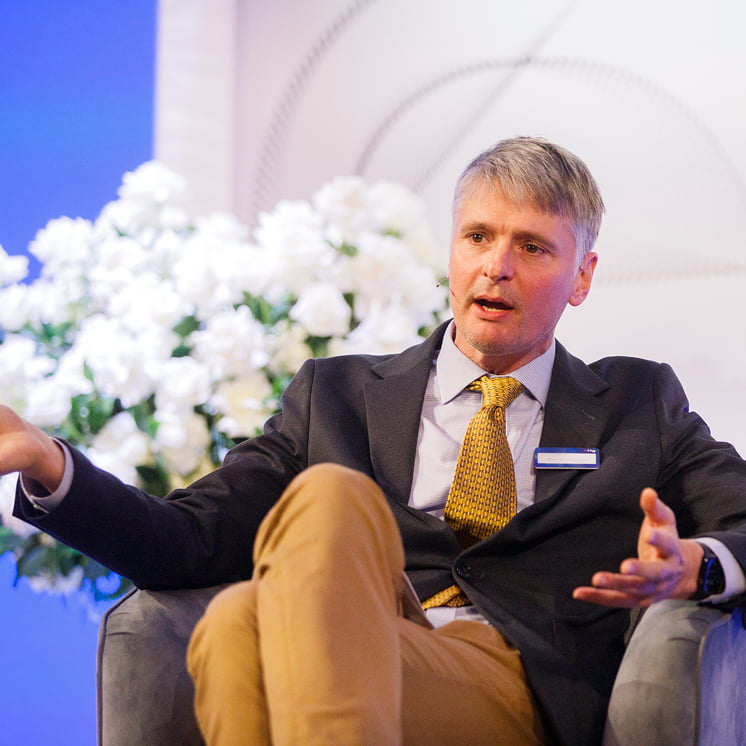
Orbit Podcast
Skin in the game: Professor Neil Lawrence on vulnerability, accountability and why the next generation will thrive.
Episode details
Orbit Podcast
Fevered determination: Building Zalos from zero to enterprise in 5 weeks
Episode details
Orbit Podcast
Trust, velocity, and building the Answer Engine: Dmitry Shevelenko of Perplexity speaks to Farouk Hussein
Episode details
Orbit Podcast
The long road to the last mile: Nic Humphries and Matthew Brockman reflect on 25 years of Hg
Episode details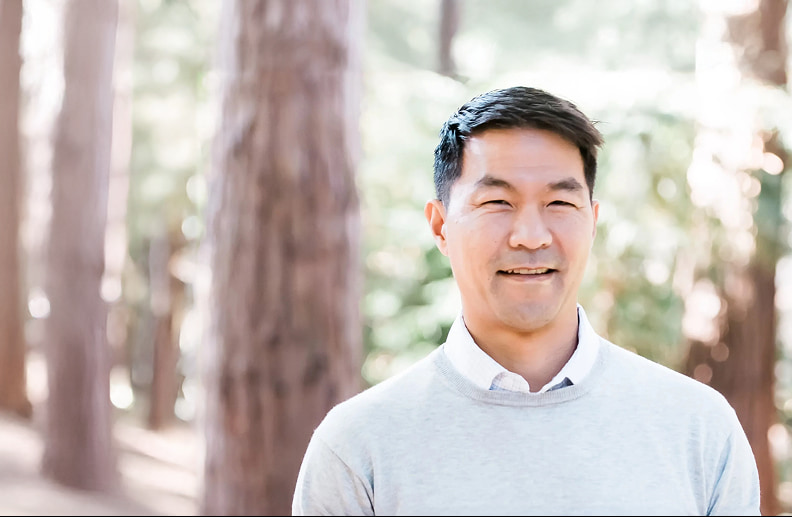
Orbit Podcast
AI, Control Points, and the Next Wave of Vertical SaaS with Tidemark Capital founder, Dave Yuan
Episode details
Orbit Podcast
A glimpse of the next generation: Zoe Zhao and Annalise Dragic of Azlin Software
Episode details

Orbit Podcast
The business case for AI: Brent Hayward of Salesforce, David Carmona of Microsoft & Nagraj Kashyap of Touring Capital
Episode details
Orbit Podcast
Mastering the billion-dollar software playbook: Joe Lonsdale of 8VC & Eric Poirier of Addepar
Episode details
Orbit Podcast