Orbit 61
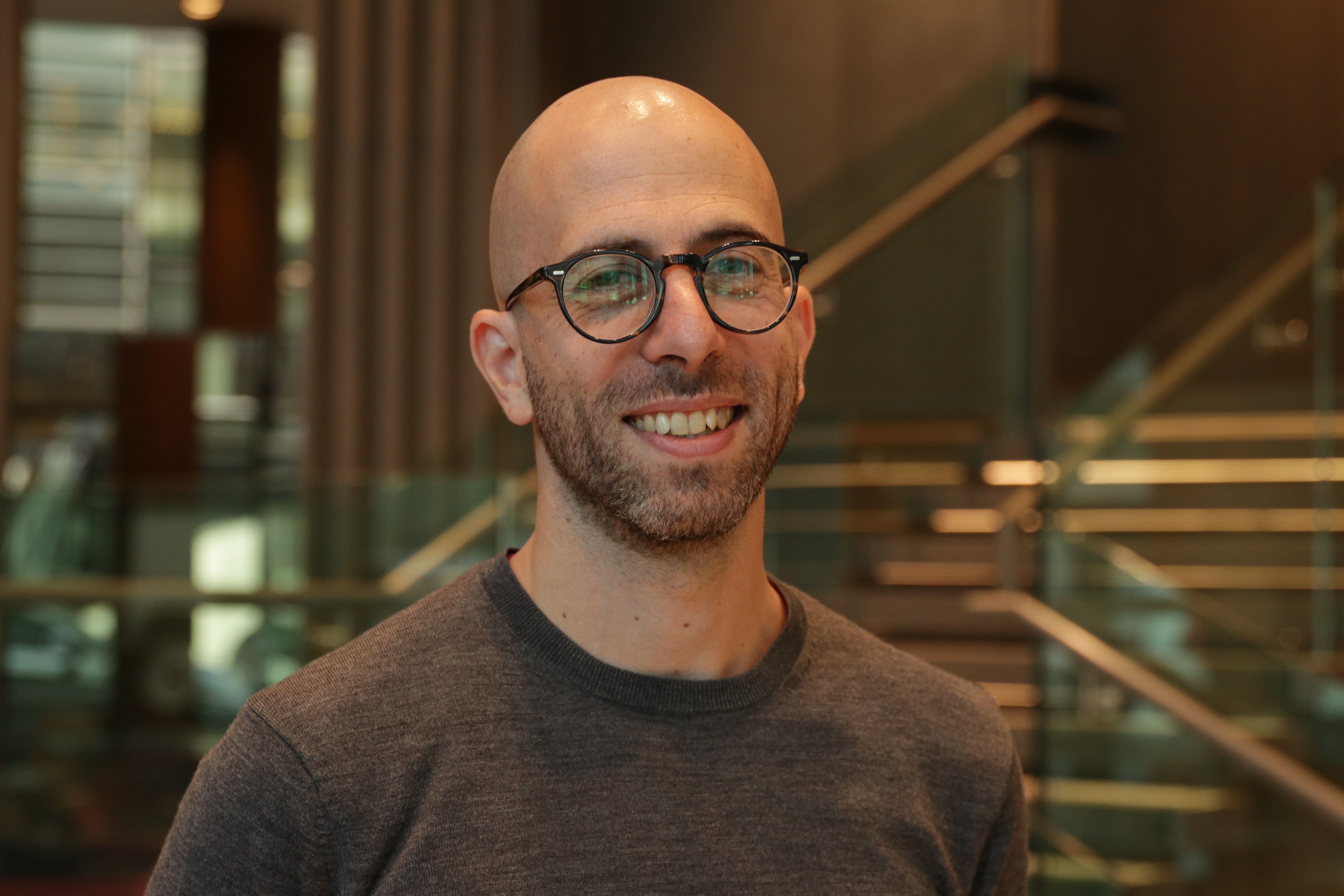
Jonathan Sanders, CEO of Light: fear is not a strategy
When Jonathan Sanders pitched Light to investors, the reaction was unanimous: rebuilding ERP would take a decade and a hundred million dollars. He did it in two years, with AI at the core. Today Light powers AI unicorns including Lovable and Legora, and Jonathan joins Hg director Soren Holt to explain how. The conversation goes well beyond automation. It's a builder's account of a first-principles redesign.
Jonathan and Soren cover the move from template-based OCR to context-aware agents, why eighty percent of AI's value comes from doing things that were previously impossible rather than making old tasks faster, and how Light's customers now sweep entire transaction populations during audits rather than sampling. Jonathan walks through Light's hackathon programme with CFOs, the operating model behind a remote engineering organisation, and the shift from finance as operator to finance as orchestrator. The line that lands hardest: "Fear is not a strategy." An essential listen for any finance leader thinking about what 2030 actually looks like.
Listen on:
Inside the episode
Investors told Jonathan Sanders that rebuilding ERP would take a decade and $100 million. Light did it in two years by building compliance, payments and accounting on a single database from day one, so agents can reason across the full transaction lifecycle rather than operating in silos.
Eighty percent of AI's value in finance will come from doing things that were previously impossible, not from making existing tasks faster. Light's clients now sweep entire transaction populations during audits rather than sampling, something no one would have requested because it was too expensive to imagine with human labour alone.
Light runs hackathons where CFOs and controllers bring real problems and leave three hours later with working solutions. The last event was five times oversubscribed, and some participants deployed their builds into production the same day, turning theory into proof they could take back to internal stakeholders.
The finance function is shifting from operator to orchestrator. Sanders sees a future where finance leaders supervise teams of specialised agents handling compliance, accounting and payments, freeing capacity for strategic support across the business. His message to hesitant CFOs: fear is not a strategy.
Episode transcript

Søren Holt
Welcome to Orbit, the Hg podcast series, where we talk to technology leaders and hear how we build some of the most successful software companies in the world. I'm Soren Holt, director at Hg, and today I'm joined by Jonathan Sanders, AI evangelist, CEO and co-founder of the AI accounting platform Light. When Jonathan first pitched Light to investors, the reaction was unanimous.
Why? Why build an ERP? It's going to take you ten years. Cost $100 million to build. Jonathan went ahead and did it anyway. But just in two years. And today, Light powers AI unicorns like Lovable, Legora and Sana Labs. Jonathan's ambition wasn't just adding AI features to existing software. Instead, he rebuilt the general ledger from scratch with AI at the core.
Today, we'll dig into how you compete with an eight-hundred-pound gorilla like Oracle's NetSuite out of Copenhagen, not Silicon Valley, and how AI can empower finance teams to think more strategically. Jonathan, thanks so much for joining me here.
Jonathan Sanders
Thank you so much for having me.
Søren Holt
Maybe just to start off with, could you please just give a quick intro for our listeners to what does Light do
Jonathan Sanders
Absolutely. So when we started to build Light, it was out of a sense of frustration of having been in two other companies that went global really quickly, and we didn't have a financial backbone infrastructure platform to help us scale. We could scale globally with our CRM system, with our product and design tooling and our CX systems.
But when it came to finance, we didn't have something that would enable us to scale globally. And so the mission we had when we founded Light was okay, how can we build a financial platform that does accounting, that does compliance approvals, that does payments, and one platform for global setup? And that was the ambition we had when we founded Light, we wanted to build something that was easy to implement, easy to use and a simpler overall organisation lift for your company.
And that's also the reason we named it Light. It's the opposite of heavy. And today we have the joy of powering some of the most successful globally scaling companies in the world like Legora and Lovable, that have just raised incredible amounts of funding and are serving the world across Singapore to India, to Europe and the US.
Søren Holt
And how did AI come into the picture? I mean, was it just by coincidence that you happen to be doing this or setting up this business at the right point in time? I guess it was 2022.
Jonathan Sanders
So it was 2022. And one of our earliest clients that we talked to was a company called Sana. And they were doing some really interesting things on this new technology. And via them, we actually got introduced to OpenAI and started working with them and had a relationship even before ChatGPT came out. And back then it was a much, much smaller organisation. But you were also working with some of the leading people in there. So you really got their take on it.
And what that helped us form was this idea of, this technology is basically like, at that time, an intern that you could deploy. And so you would need to help the intern understand what the intern needed to do, and you'd help to understand, okay, if the intern is doing this task, where do I put the guardrails to double check the work? But that sort of core thought has been with us since then and since 2022, of course, the underlying models have gone from intern to sort of maybe analyst to associate to now, maybe it's a C-level that you have basically available to you.
And most people are still figuring out how do you actually use this intelligence, this infinite amount of intelligence you have available to you? And that's one of the core design questions, and also one of the core strategic questions to all companies out there: what is your strategy for deploying AI?
And we're doing that every day with our clients and showing them, how can you actually embed this into your organisation? How do you need to think about things differently? How do you get the most value out of this new technology to drive results forward for your company?
The very first thing we did with AI was solving the problem of, okay, how can we do OCR of invoices? How can we do that in a good way? And classically you would have this problem of a PDF document comes in and then you have some sort of machine learning, scripted standalone service that looks at it and goes, oh, this is a template from XYZ supplier, and if it's a template from XYZ supplier, I know that line items are in these XY coordinates. The total amount is in these other XY coordinates. So it starts to draw coordinates all over the documents. And then it extracts the core information from that. And then it parses that into a data object downstream.
That's a very fragile setup. And there doesn't need to be a lot of changes for that to not work. And then you just don't get any data extraction from that document.
One of the first applications of this technology was, we can make this entire journey much simpler by basically having an intelligence that reads all of those incoming documents and has a deep knowledge and understanding of your entities, your chart of accounts, your tax codes, your different metrics like department and projects. And not only does it do extractions, but it also has the bookkeeping and pre-accounting step built in. So we do all of the things at once and we saw everything—
Søren Holt
Is the same database, right.
Jonathan Sanders
Everything is the same database. But what we saw was much higher accuracy output in that second model. So we did it test by test. We had a classical outsourced OCR engine. Then we had a classical outsourced OCR engine with humans in the loop. And then thirdly we had, okay, can we actually use this intern to do things?
The thing about the intern is we could give it a lot of extra context that doesn't fit in those other models. And so you could use that context to understand, okay, what did I do the last time I processed something from this vendor? How did that look? What are my sort of custom instructions?
And so one of the first ways that we could give people a way of modifying the product was, we can say to them, okay, if you have something that is bespoke to you, you can just enter it here and our agent will do it on your behalf. And that was one of the very first real applications of it, where we could see an immediate value. You could have certain customers saying, I might get a large invoice from AWS because it's my core cloud provider, and I want to take whatever the amount is. I want to take 65% and put it into this cost centre. And the rest I want to put it into this cost centre.
And if you want to do that in the old world, you would need to create some sort of if-then statements and codify it. And what they did in Light was just to write a single sentence and then it did it for them.
And so that was part of it. Can we make a product where the CFO himself can just express what he wants in English and then the product does it for him? And so it's back to this, the new programming language is not if-then statements. It's English.
Søren Holt
So less point and click, less if statements.
Jonathan Sanders
Less point and click, less if statements.
Søren Holt
But let's talk to the actual accounting.
Jonathan Sanders
Much more empowerment to the CFO. And one of the core things we wanted to do was, can we bring a product to the market that gives much more power into the CFO office, rather than them relying on either internal or external IT support, consultants, or outsourced labour? But basically bring them something where they can control it and they say, okay, I want our flow and our operations and our way of doing intercompany and our ways of doing accounts payable or accounts receivable to be like this and this and this. And now I want to change it to do like this and this and this. And I have the power to do so without needing to rely on a lot of external factors.
Søren Holt
Yeah.
Jonathan Sanders
So basically give you something that is, I believe, more meaningful to operate.
Søren Holt
I would love to come back to product. I just want to first cover a bit more about your journey. You decided to found the business out of Copenhagen. And again, we're having this debate. Where do you start your business or where do you place your next office? Should you start a business in Europe or the US? How do you think about Copenhagen?
Jonathan Sanders
For me, it wasn't something that I needed to think about a lot. I've been part of two other companies that did quite well despite being in the Nordics. You could make an argument, okay, I should have gone to Stockholm. Because that's where—
Søren Holt
That's where the AI unicorns.
Jonathan Sanders
That's where everything is happening these days in software, even globally. It's a powerhouse.
Søren Holt
Why do you think that is? By the way, I'd love to hear your perspective on that.
Jonathan Sanders
Yeah, I'll come back to that. We could certainly get back to Stockholm. That's an amazing story. I didn't have any doubts or hesitations on actually creating it in Copenhagen. The thing that I needed and that I knew we needed to do was that when it came to setting up our go-to-market motion, and we're selling to mid-market and lower end of enterprise, we needed that to be centralised in London to cover EMEA.
And that means we have outbound AEs, I need to be able to hire people who have experience in enterprise and mid-market in the office of the CFO, and when I need to expand that, and I want to hire people who have experience in the office of the CFO and in enterprise and can speak French, where do I set that up? And for me, that was obvious that our commercial hub needed to be London, because we can start all of those things. We can get French speakers, German speakers, etc. And then when it comes to a point where we need local offices, we already have some sort of playbook that we can use to operate in those local markets that is seeded from one place.
Søren Holt
But what about the product side, which presumably is the hard part, because we're talking about how do you get the AI talent into our businesses? And sometimes you need to actually have the brand to even attract, on a massive salary, because you're competing with Silicon Valley. So how do you solve that riddle?
Jonathan Sanders
For us on the product side, it's the complete opposite. So we've always had a high bar for engineering and design at Light. And I think we have a high bar for all of our talent. I think we have a wonderful team of some of the most talented people I've ever worked with. But we certainly have a high bar for talent there.
Now to get that calibre of talent in Copenhagen at the clip that we needed, at the bar we needed, it would not have been feasible. So our engineers are remote. Our engineering org is a remote organisation. All of our engineers are in different locations. There's a few here in London, there's a few in Copenhagen and Stockholm. But that is more by accident than by strategic choice. But the vast majority of them are in the Americas. Spain.
Søren Holt
So it's like a virtual organisation.
Jonathan Sanders
It's a virtual organisation on the development side, and then it's in office when it comes to go to market.
Søren Holt
And I think your co-founder is called Philip, right?
Jonathan Sanders
That's correct, yes. He is based in Croatia.
Søren Holt
And he's the CTO.
Jonathan Sanders
He's the CTO. He's based in Croatia. And we've been working together before in that same constellation. So we have by now quite a long working relationship together.
Søren Holt
Yeah.
Jonathan Sanders
We've been working together for eight years now. And that has always been something that has been easy for us to do. And that has allowed us to attract and cultivate an organisation on development that is better than anything we'd had before.
I think one of the hard things, because there is some part of your question about how do you get the AI element in there. And I think one of the hard things to do is, how do you show the right culture, how do you show the right mindset? And how do you show the right risk appetite when it comes to distilling into your organisation, this is how we think about AI, this is what is actually possible. And in these areas, this is where we want to be careful and have a classical way of developing the software. And over here, this is where we create room for us to experiment and think about, how can you actually embed this intelligence?
Because fundamentally you have this infinite amount of intelligence. And I think we're still at like 1% adoption. Nobody has figured out how to deploy all of this in a way where you feel like, oh, I've actually exhausted the intelligence available to me. I don't need anything more. I don't think any organisation is yet at that level where they say, no, no, no, we're good on intelligence. We don't need any more intelligence in this organisation.
Søren Holt
No, that'll be unpopular. Always need smarter things.
Jonathan Sanders
You always need smarter things. And it's just, you have this infinite amount of intelligence available to you. And so the question is, how do you then deploy it? Where does it make decisions for you? Where do you need somebody else to be in the loop?
Søren Holt
So finding the people who understand how to harness that intelligence, is that what you find is the hard thing when you think about new talent?
Jonathan Sanders
For new talent, we don't have the playbook. We don't have the answers yet. So you need to foster a culture in an org where you have some senior people that maybe have studied data science, or have a long history in computer development or in software development. And we need to pair them with, okay, we also need to have novel ideas and creativity of, how can we do things differently? How can we apply things differently?
Because the framework that we have when it comes to software development in Light is that there are basically two types of tasks that you can do with this intelligence. One is you can just take a look and create a list of all of the stuff that people normally do and say, okay, Soren works in accounting and he does month closing and he does balance sheet checks and he does reporting. And then you go through the list and you say, okay, if we apply intelligence to task number one, how can we make it more efficient for him? Task number two. Task number three. So that's the laundry list. And going through that.
There's a second category which is, Soren could do things that he couldn't do before if he had the tool available to him.
Søren Holt
Yeah, but it's available.
Jonathan Sanders
The intelligence is available to him. But he hasn't thought about that. So when you go and ask him what he needs help with, he's going to say one, two and three because that's what he's doing today. But he's not going to say, oh, actually, if this could happen, that would be super valuable to me, because we never do that. And so that's the second category of things that we're looking at.
And we have a few test cases here. And one of them, just to give you an example, is we have clients going through audits where your auditors come and they take samples of different transactions and then they check them for the different assertions. Is it complete, is it accurate? And then they go through it.
And this was just an idea when I was talking to one of our clients about what their upcoming audit was. Well, actually, now you have this infinite intelligence and we could go through all of your transactions. And mark them for the different assertions.
Søren Holt
And not just a sample.
Jonathan Sanders
Not just a sample, just the whole population now. You can just do the whole population. So let's just take your audit policies and then we'll do a sweep of the entire population. And then anything that comes up from that agent, we just do a double sweep of. And then lastly we can manually fix the last 1%.
And that's a different way of looking at it. So that means through that exercise, now the audit is ongoing. But when they do sample checking, when they pick a transaction in our system, they get a full breakdown of why it is compliant with the four assertions. And that's just a different way of thinking about it.
And it's not to say that we have all of the answers for how, but it's just, I think 80% of the value of this technology is going to be coming from doing things that wasn't possible before, or you didn't think about before because it was too expensive. If you had human people doing that, it would be like, no, that's insane. That's why you do samples. It's too much work for humans to do. But we don't have that restriction anymore. You have infinite intelligence.
Søren Holt
It gets back to your intern point. You had an intern that was free, infinitely intelligent. You just go and ask that person to do a bunch of work. More strategic work?
Jonathan Sanders
Yes, exactly. But you can throw more work at them. And so this is the point. How can we help companies think about this way of thinking where you can do so much more?
Søren Holt
But does this require, sorry to interrupt you, does this require some really lateral thinkers in your development organisation that, you know, they're not just people who've been 20 years in the accounting space building the same thing?
Jonathan Sanders
It requires lateral thinking. A lot of that can come from me as the CEO, but it can also come from our design organisation. We have found some unique talent of people who are both engineers and have studied accounting and been partial CFOs for different companies, and they come in understanding both sides, and they can come with ideas.
But then we've also managed to hire really good engineers who can think a little bit like this. Because this is a new technology. And the options, the opportunities are astonishing. I think this is the biggest technology shift that we will ever see. Almost beyond doubt.
And I think the core models and platforms are way above where we are in terms of applying them. On the application layer, I just mean us as companies, the way that we even use ChatGPT or Claude, we still have a long way to go to get the full value of the underlying models.
Søren Holt
Even if, we often say, even if the models don't improve, if they don't get more intelligent, there's still a bunch of use cases and we're only seeing the tip of the iceberg.
Jonathan Sanders
We're still just at the tip of the iceberg because even today, a lot of companies can get somewhere by just forcing everybody to use Claude or something like that. But it's still a very reactive mindset where it's like, oh, okay, I need to do something. And then you go to some AI instead of having a proactive setup where it is actually doing things on your behalf.
And that's always been our idea with Light. How can we build an active system instead of having a passive system where you need to prompt it to do stuff? And that's why every time a transaction hits, it kicks off things. It's why you can have, okay, every month it goes through every single transaction and marks them for the four assertions. And you can schedule that for when the GPU load is cheap. So you can do these batch overnight jobs because it's not urgent but it's valuable for you.
And even that first example where we had an intern reading all of your incoming bills and codifying them and entering them into an accounting system, that in Light is now three different agents. It's an intern that does the first job, then it's the second agent that's adversarial and double checks all of the work to improve that accuracy more. And then it's a third compliance agent that basically looks at all of that and says, okay, does this correspond to all of the prior transactions? Does this correspond to a statement of work and a contract?
And then creates a short summary. "All okay, aligns with historical transactions." Or "Please review, out of line with contracts." And then you as a reviewer, you have all of the context you need in order to make your best decision. Because most reviewers are just mindlessly clicking okay on every single transaction.
And that to me is, if we apply intelligence into that compliance approval layer, what does that look like? Well, an immediate first step is you can give them the right five words that they need to know whether something is okay or not. And 90% of the time it's okay. So you can even have the agents approve them for you.
Søren Holt
You said in the beginning, you've decided to build the whole stack from scratch. It's not just accounting, it's expense, it's AP, it's AR, it's payments. And then you're doing audits. So why do everything all at once? Is that because the things need to talk to each other?
Jonathan Sanders
It's the same database. Fundamentally for us it's the same transaction. It's the same transaction you look at from different lenses.
You look at that transaction from an approval, compliance, business lens. It's like, all right, Soren spent $1,000 on this. Is this okay? Should he have spent it? Was that a good use of company funds? So that is one lens.
Another one is the accounting team will go, okay, Soren spent this money. How should we think about it? Is that something he spent for a service that spans 12 months? And it should be spread across? Or is it just a single month and it hits the expenses immediately in that month? Which cost centre does it go to? Which GL accounts? Is there any VAT on that we need to reclaim? And that's the accounting lens of it.
And then finally you have the payment lens. Has the cash left the accounts? Does it reconcile? And how does that cash transfer get initiated? And in Light you can see the single transaction from all three views at the same time. You can initiate the cash transfer directly from the platform, either by using the cards inside of the platform or by integrating your banks. And then we basically send a payment file instruction to your bank, and they'll execute the transfer. You can see the compliance review. And then you can see the accounting review.
Now what is becoming more and more apparent is that this works phenomenally well, because on top of that, you can now have more agents talking together on the same transactions. You can have the compliance agent and the accounting agent talk together about, okay, this is actually not compliant. So we should accrue this and figure out what we do until next month.
And for us, what it ends up being is basically just different tools that you allow agents to call with the right permissions, which just means that you can have an orchestration layer on top of all of this that is much simpler for you to execute on.
So in the old world, this would be a lot of UI. And in Light there is a level of UI to this, but we're moving more and more towards this just being a text interface where maybe you're talking to it via Slack or Teams. We have Slack and Teams integration. We also have a mobile app so you can talk to it there.
Søren Holt
And Claude.
Jonathan Sanders
And Claude for the MCP. Or you can use the threads on the web app. So in both the mobile app and the web app you can sort of—
Søren Holt
UI is flexible these days. Whatever you have is flexible.
Jonathan Sanders
And what we're moving more towards is having multithreading. So in our UI and in the mobile app you can see several threads and you can see, okay, the agents are still working on the first two tasks I gave it. And then I can kick off a third task and I can see that it's working on that. And now it's finished with task number one.
And maybe it's waiting for my input, which could be something like, check everything Soren spent last month. The second task could be, how much revenue did we have this month to date? So it could be very different tasks across your entire stack. But having the underlying tools available to you allows you to do stuff like, send out this invoice, pay this bill, do this, do that.
Søren Holt
How have you been dealing with, I'm trying to think through, what are some of the challenges our software businesses have had over time, particularly within accounting software? One of them has been going international. Where, unless you're dealing with companies who have very international accounting rules, there's a bunch of very localised rules. And you're helping your business go from mostly Nordics to North America, and from the UK to North America. How do you deal with that complexity? Is AI making that easier?
Jonathan Sanders
A lot of it is about context. We work with different global partners that have deeper expertise in tax compliance and in local jurisdictions.
Søren Holt
So that's the likes of the actual accounting firms.
Jonathan Sanders
The likes of the Big Four, the BDOs and so on. And the fundamental thing we get here is a lot of context that we can then ingest. And that makes it easier because fundamentally, if you have an entity in the UK and you have an entity in the US and one in India, you need an intern in India that has a lot of context on all the rules and regulations in India, and you need an intern in the US that has a lot of context on rules and regulations in the US, and the same with the UK.
The job is basically to help build those agents. And those agents then sit in different flows. Some of them are about checking your entire book for audit assertions. But some of them will be, okay, if I'm a US AP intern, this is what I need to care about. I need to get this information so the 1099 is accurate. In the UK, it's, I need to have this context of when is it reverse charge and when is it not? And in India it's different again.
Søren Holt
So there's some things you've decided you're not going to do. It might be manufacturing, supply chain, because you also have to prioritise, at least from where your go to market is. But from a product perspective—
Jonathan Sanders
From product and go to market, we are serving predominantly tech companies. Service companies. Asset-light companies. A lot of them are between 2 to 50 entities. That spread is broad, it's a very global base that we're serving. It is US, Europe, APAC and South America in a few of them. So there's a large spread.
But we do not have any inventory and manufacturing in the platform. We are not going out to market to capture the German Mittelstand, for example.
Søren Holt
But still SAP land. I guess that's—
Jonathan Sanders
That is very much SAP land. Yes.
Søren Holt
Maybe coming back to, you talked about in the beginning comparing OCR versus what an LLM can do on accuracy, pulling out things. We often think about an LLM as a probabilistic beast that can hallucinate. Obviously finance is a place where you want 100% accuracy. CFOs demand that. And how do you kind of solve that tension of getting your systems accurate enough? I know there's always been this discussion, like with self-driving cars, we're already better, right?
Jonathan Sanders
I mean, we're coming into that.
Søren Holt
But how did you solve this? Just practically, getting the accuracy high enough that you let your customers run with it.
Jonathan Sanders
Well, one thing was, back to the OCR discussion, can we build something that is more accurate than existing established platforms out there? So we used a well-established specialist OCR provider. Then we had some issues with that and then we added humans in the loop and that added some more accuracy. But still we had issues with the accuracy. Humans in the loop are still fallible. And so we had some cases where they made mistakes because some of the invoices they got were complicated. They got complicated invoices that had multiple lines with different currencies on it. And it was a little bit hard for them to understand, is this in US dollars or in Swedish krona, because it has three different currencies on it.
And then we basically replaced that with the LLM and we saw better results. So by that, you're fairly confident that you have a system that performs better. But your objection isn't, can you show me that the system performs better? Your objection is more, okay, you're using this new technology that everybody is a little bit afraid of.
This is a mindset thing. What's the message for the CFO or the CEO about this new technology? And the message that I would like to say is fear is not a strategy. This technology is here. And people who can adopt it and use it and learn it and understand it are the best suited to win tomorrow.
And I think if you're fearful of it, I think one thing is to be fearful and another one is to be mindful. And I think it's okay to be mindful. I think you should be mindful and say, I understand it, I've experimented with it. I see here is where we need to do something extra, and here is where we can actually use it. And that's a different thing from being fearful.
And that is what comes into the question of, when do you let self-driving cars drive? How do you deploy that in your finance stack where accuracy is high? One answer is to say, well, in our platform it is higher accuracy than having a traditional OCR plus a human in the loop. But I don't think that gets to the heart of the question, which is, maybe we're just afraid of this new technology, but—
Søren Holt
It's a human problem.
Jonathan Sanders
And it's an emotional thing. More than a rational thing. And so how do you address that emotion? And I think it's best to address it head on and say, we need to appeal to your rationality. You as a CFO or you as a finance leader, you need to care about the system that produces the most accurate results and has the best path to higher accuracy. Not a system that produces less accurate results and has no learning in it.
If you have the two worlds, you can say, okay, I'm going to continue using template-based OCR and have humans in the loop. My baseline is never going to improve from here. Or, the system learns. Every time you give it more data, it learns from prior transactions, it learns from all of those things, but also the underlying models will improve and the underlying instructions, the memories so to speak, that we build in Light improve over time.
Søren Holt
How did you solve, I guess for instance, because I'm thinking, you're putting in a bunch of text policies into the system. What if some of those policies are inconsistent? What if a junior finance person who doesn't have the full picture puts something really stupid into the system? How do you guard against that human element?
Jonathan Sanders
I think this is an interesting question. One thing is there's a little bit of checking when you upload things that it's consistent with each other. But what you should really care about is, do you have a system that learns over time and improves over time, organically by itself, without you needing to prompt it all the time?
Søren Holt
Yeah.
Jonathan Sanders
And so one of the things that the system can do is, you can upload your policies and then you can have transactions coming in, and then you have your agents looking at policies, looking at past transactions, and then updating it.
Now what happens is it gets a little bit complicated. But you're the intern. You have this official policy you should comply with. And then you have these transactions coming in and you need to mark them to the right GL accounts, make sure that they get through the right level of approval.
What you then start writing down is Soren's little operational handbook. If this invoice from that company comes in, this is what we do. Because I get an invoice from AWS and they send me 150 lines. And that is a waste of time for me to go and check all of those. So whenever they come in, I just delete them all and put it into one line and hit the books and I'm happy.
That might be your operational policy. And I don't think you want to have that in your official policies. Because this is a lower level. Now, this lower-level policy is something that the AI updates by itself. It looks at what you do and it starts to update this lower-level policy. And that is basically a translation layer between the official thing and how we make it operational in practice.
That is also, in your official policy you might have something like these people should be approving, if above X then this person should approve, etc. And then you go into real life and then, oh, we have an emergency. This thing needs to get approved. But David is on a plane for the next 24 hours. How do we think about that? And then you maybe discuss it with the CEO and then you say, okay, in those cases, this is how you can process that. And then that becomes part of your operational policy.
Søren Holt
But you've also built in approvals. And the system also prompts you. Because I think people are mostly used to, when you deal with Claude or ChatGPT, you talk to it. It doesn't talk back unless you talk to it first. But here you have agents that approach you. They work actively. They're not passive.
Jonathan Sanders
This is the entire thing with Claude. It's a great product. But it does foster you into a slightly passive way of thinking, because you need to feed it all the time for it to do stuff. And for finance to work well, it needs to be an active system that prompts you and says, this thing comes in, I've seen the last five times that we always do this. We're going to update our memory. Do this instead. And then you go, yes.
And so the idea is, make it easy for you as an organisation to constantly iterate on what is your operational handbook. That memory is what actually feeds the agents. Your policies will get them up to maybe 90%, but then from 90 to 99% in terms of straight-through processing.
Søren Holt
Maybe shifting gears a bit back to go to market. Hearing about how you've been winning customers. You have a very impressive customer list, quite a few nice software businesses and the AI ones. But maybe take an example like Lovable. How did you convince those guys to go with this little startup? You're an AI company, I'm an AI company. How does it work?
Jonathan Sanders
So one of the ways that we work with them is to say, okay, this is a new system, this is a new team. You're also a new company. But we will work with you and we will do whatever it takes to support you in your journey. And that's been very much the guiding spirit in how we've been working with our clients.
I would say, one thing that has helped us a lot is in building and in designing Light as a core financial ledger, we had the pleasure and the privilege of working with some highly regulated, publicly listed companies, and we had the pleasure of working with some amazing experts across accounting, taxes, building GLs, architecting GLs before. And we could draw on a lot of their knowledge.
And so now we're talking to more enterprise clients where there might be a specialist tax advisor coming in that has been doing tax accounting for the last 25 years and knows tax accounting inside and out. When we then show her how taxes work in Light and how it operates, she's impressed. And that to me is, one of the things you have as a benefit, and this might sound obvious, is when you're building it from scratch, you can learn from all the others and you can stand on their shoulders.
And I think the change is coming because the uptake in output and what you can do is just so much. Not only can you close down open positions because you can do more with the team you have, you can also do stuff that you couldn't do before. And we're seeing this incredible, we're doing these events where we host CFOs and controllers
Søren Holt
Hackathons.
Jonathan Sanders
We have these hackathons across the globe. And we're bringing in—
Søren Holt
Tell me about that. How does that work?
Jonathan Sanders
Basically the idea is this. You're a company, you have problems in the CFO office. You want to solve problems. You also want to experiment with AI. And the idea is, fundamentally what we need to create is a room where you can come and you can experiment with AI in a room where you don't need to think about, oh, I need to talk to my IT and compliance department about how I set it up. It is just, come with your problems.
We have experts on our side. We have experts from Lovable who we're doing this with. And the JP Morgan side, when they're joining us. And the idea is, if you have a problem, we can help you translate that problem into a working solution in the next three hours. And at the end of the three hours, there are prizes for number one, two and three. So you're all competing against each other. Give it a little bit of a drive going.
But the fundamental idea is just come in and talk about your problems. And then we can show you how you can solve them. So everybody gets a sandbox version of Light. And then they can integrate that with different things, or they can build things inside of Light.
And one of the winners was a large company that had a very complicated AP flow, where they got invoices from the same vendor, but the vendor would invoice them in different projects, and the different projects would have different payment terms. So they basically have ten different contracts with the same vendor. And then depending on which contract the invoice falls under, you need the different payment terms.
Manually checking that really sucks because it's, okay, this is contract number nine. And then what's the payment terms? And you've got to find that. But they could build something in Light. They had a little agent that they instructed to look up the relevant contract for this invoice using the specific field and then figure out the payment term and then put that in the payment term field on the invoice.
And they did that in a matter of an hour and a half. And then they showcased it to the rest of us. Imagine solving that problem in the old way of working. They would never have been able to do that on their own. It would be, I don't know, four weeks is probably low, but that would be a month-long engagement to build all of the statements and validate it, and extracting data from contracts and doing the whole data management piece.
Now it was the Comptroller and the VP Finance building it together, and they had it in a matter of hours.
Søren Holt
What we often find with CFOs is it's probably hard to get them into a room in the first place. People are used to their way of working. They're still the most conservative people on the planet. In a good way, if you're the incumbent, right?
Jonathan Sanders
Yeah, we do see a big push from the board into different companies of adopting AI and being AI-native. So everybody is talking about it. We are benefiting from that in that there's a lot of demand for these events. The last one was five times oversubscribed. And people want to come because it is also a way for you to experiment and say, okay, we actually did something and we got some results.
And some of those results, people are deploying it directly in production. Either on the day or the day after. And some people are taking, okay, this is actually how we could make it work. Like this example, they uploaded a dummy contract and said, okay, this is actually possible. And then they take that on and say, look, it is not just theoretical. We could save this much. We know now that this is possible to do. So now the business case for us is much clearer.
The amount of human hours that we spend checking all of these contracts, we can just cut them. And we can do that in a couple of days if we get the okay. So your arguments internally become much stronger because now you have proof. How can I deploy it in a way that actually helps? This is how I can deploy it. This is what actually helped me. And now I can go to my different stakeholders, whether that is IT or risk or whoever it is, or the CEO if you need some permissions. To say, look, this is the output, I already validated all of it. My case here is pretty strong. I know what I'm talking about.
Søren Holt
Coming back to product. One thing I'd love your take on, which I found very interesting, is you're working with a bunch of the model providers, right? And you've tailored it so for some use cases you use Anthropic, for another you use OpenAI. These models change quite frequently. You're designing a product roadmap. How do you deal with all of that volatility? How do you think long term but also short term?
Jonathan Sanders
You've got to be on top of the model providers. But one thing that came out relatively early was, to some extent they are quite similar. All the different LLMs, you talk with them and you get output and qualitatively if you're just chatting to them, it feels similar. You have a similar vibe when you're talking to them. So there's a level at which they're very similar.
For a long time, though, you had some differences. And for whatever reason those differences have persisted. So for quite some time, Claude, Anthropic Sonnet, has been really good at the coding part of it. And so that's an interesting thing to think about. When you have workflows in finance that are quite mechanical, where you want an agent that outputs something that double checks everything using maybe a little script, maybe you want to double check some numbers against each other on demand, that's the model you want to go for.
Google, for whatever reason, has had a model that has really good recall precision. So if you feed a lot of data and ask, where is this in the data, it is really good at recalling, this is over here and this is over there. The other models would sort of break down at that point. So that means when you have flows where that is important, if you have ten different contracts and each contract has a hundred different invoices against it, you want something that can go across that whole library of documents and understand, this invoice is associated to this contract because X is here in this field and X is here in that field on the contract. And then the payment term should be this or that.
So you need to build up some level of institutional knowledge in the org of which model works for different applications. And then whenever new models come up, you have an eval framework for testing the different new models against each other.
Søren Holt
An eval framework for your use cases.
Jonathan Sanders
You have an eval framework per basically a vertical. We have different verticals, and they're just flows. You have an AP flow, a spend management flow, a receipt flow, a subscription revenue flow. We're thinking about them as flows. And then you can employ agents in the different flows, and the agents are doing some sort of output. And then you have evals on that.
And obviously, and I think this has been true for some time, you need to have a base layer where you can switch agents between different LLMs immediately. You need to abstract whatever is specific to them into your own. So we spent quite some time on basically abstracting away everything that is provider-unique and saying, we do that on our side. And so that makes it easy for us to switch. You can even have a conversation with one of the agents in Light, and maybe it's using Gemini, and then we switch and then it uses Anthropic on the follow-up question. And you would never know.
Søren Holt
But is it also a cost problem? In terms of, you can play the vendors against each other. The older models are cheaper.
Jonathan Sanders
The older models are cheaper, the smaller models are cheaper. I try to actively discourage my engineers, and I know this is a thing, engineering cares about the cost-benefit intuitively. I do try to discourage them from thinking too much about costs, because we do see costs coming down. My view is that's going to continue. So maybe we're just optimising for the wrong thing because we've got to go to where the puck is going, not to where it is right now.
I think the choice between large and smaller models is more about what's the UX experience. And where do you want that to be?
Søren Holt
So speed.
Jonathan Sanders
Speed. Exactly. Because the model size has a direct correlation to how quickly it responds. And sometimes it is more important that I give you an instant answer than that I take a long time and carefully think about it. Because if I can give you an instant answer, I can allow you to do follow-up and hone in.
Maybe you have some sort of intent or there's something that you're doing, or maybe we have a flow where a receipt comes in and I need you to instantly tell me, which cost centre is it in or which project should this be allocated to? And I need that to be in a matter of seconds and not minutes.
Because if it's seconds, I have a much higher chance of you telling me which project it should be allocated to. Then maybe a couple of minutes later you've forgotten about it. You've closed down the application. And when you see the notification you need to sort of, oh okay, I bought this thing. I need to tag the project. So sometimes speed is the most important. And that's how we look at the trade-off.
We don't actually look at costs as such. We do monitor our costs, of course. But it is something that is a little bit early to optimise for in our business. There are other businesses where you're basically selling straight-through LLM tokens almost. And there you need to know exactly your cost base because otherwise, what's your margin?
Søren Holt
We're doing some of that. I mean, arguably even Claude on some use cases has a negative gross margin. If your customer is very heavy on compute, you might be losing money if there's a fixed price.
Jonathan Sanders
Exactly. But we have very healthy margins. So it's not something that we need to optimise for right now.
Søren Holt
What's your key constraint to growth at the moment? And how do you see that changing?
Jonathan Sanders
It's going to be a non-AI answer. But it is finding incredible talent. I would wish I could spend more, but I'm spending most of my time talking to incredible talent and making sure that we're building the right team.
The right team today is hard because you need people who have seen something before but still have that lateral way of thinking. And so in the entire org, our operating model also has this recursive element where we're trying to constantly rethink, well, what's actually the best way of building? The product needs to be efficient and the org needs to be efficient. And what does that mean for the different functions?
We have marketing and sales and onboarding and support and design and product and engineering. Now design and engineering is like 80% overlap by now. 90%.
Søren Holt
Yeah, for sure.
Jonathan Sanders
The designers, they're like, oh, it should look like this and function like this. And then, wait, let me just make a prototype in production, in code, that basically shows you how it works. And then one of the engineers looks at it and goes, well, it just needs a little bit of fixes here and there. And then it goes live.
So that handover, before it would be, they sit in Figma and then they give some Figma screens to an engineer, and then he types it up in code and implements it and then feeds it back. Now the designer can get to a point where it's, this is what I want. And the engineer can just double check it and verify it, and then it goes into production. So that feedback loop is much closer.
So that means you basically have functions melting together. You have the same on the PM side. We have incredible product managers that are ex-founders, ex-engineers, ex-accountants, who can also go and say, okay, this treatment here should be like this. Here we need to highlight this. Wait, how could that actually look if I create a prototype of it and then hand it off to engineers and they know exactly what they want?
Again, we have more people contributing with ideas directly to the codebase. So the central orchestration of work becomes more GitHub, where all of the code is managed, rather than further upstream. That's one thing that is happening.
But I also see the same happening in marketing and in outbound and in sales and in handovers. In sales, our team has been pretty good at taking all of the transcripts and getting to a really good prompt of summarising this transcript with everything you know about Light and this is how Light functions. And these are all the pages about Light. And then giving them a summary that is succinct, summarises their problem and explains how Light works against those problems.
And we get really positive feedback that this is some of the best summaries they've gotten of how their problems are, but also how the solution addresses those problems. Because marketing and sales is fundamentally about us understanding the customer and the customer understanding us. And how can you bridge that gap quicker using AI? And that even leads into when it comes to implementation.
Søren Holt
Do you use, by the way, a lot of external AI software? Or do you kind of—
Jonathan Sanders
We use external software. And we also see a bit of a collapse in the amount of software, to be honest.
Søren Holt
Getting overwhelmed maybe?
Jonathan Sanders
No, I mean in that we're actually cutting certain things. Because your entire flow becomes so text-based that—
Søren Holt
Right.
Jonathan Sanders
Maybe before you would do these enrichments and follow-ups in a dedicated tool for that. But you don't need that anymore. So we do use external software. But when we have a really good AI-native external software, it typically ends up being more or less the only software that function uses.
Before, I think they would have like four or five or six different—
Søren Holt
Software.
Jonathan Sanders
Enrichments. And that is all collapsing. Because if you want a really good agent, it needs to call different tools and the whole enrichment layer. Well, if it can call a Google search and look up who Soren is and look at his LinkedIn and enrich, all of that stuff has kind of collapsed.
So you need that agent to be able to do different tool calling so it can look you up and get data on you, but also go, okay, he has just looked at our LinkedIn, this is the message we should send him. And so on.
I do see that you are collapsing a little bit around the different agents that you need to use. If you have four or five different things, it becomes hard to orchestrate around those five different vendors.
Søren Holt
You want to interact with fewer things, right?
Jonathan Sanders
You want one agent that can just do it. You don't want to need to copy paste from here into there. That's not where the future is going.
Søren Holt
Maybe that's a good segue into my final question, which is, it's 2030. For your customers, the finance teams, how do you think a finance team will look different in a few years' time?
Jonathan Sanders
Things are moving fast. I think the nature of what they do is completely different. I think you can already see that what they need to do to really perform well is becoming more from an operator to an orchestrator.
More from doing the task to supervising the task, being on top of different agents and saying, okay, the easiest mental model is, I employ four agents for this work, and I employ a human here, and I have four agents over here and another agent over here. How do I oversee that and how do I think about that? I think you will see more of that.
Now, what I think that means for the business is the rest of the business will see much more support from finance. So whenever they have a question, they can get it answered. Finance will be much more proactive. They'll be like, hey Soren, you've used most of your budget. Can you explain why? It will allow for corner cases.
Søren Holt
I was just thinking through strategic things. Things you didn't have time for before because you're just stuck in your everyday. Just getting your books done every month was stressful enough.
Jonathan Sanders
Exactly. But you'll be much more able to support the rest of the business with, hey marketing, maybe we should invest more in this channel, because this is what the data is telling us. Or to sales, hey, this geography is doing phenomenally well. Might be something to think about or bring up at the next meeting. Or even lower level—
Søren Holt
The cross-functional.
Jonathan Sanders
Becoming what we call the business finance function, embedded at the node. And I think that's going to happen. The finance team oversees this. And then the rest of the business can interact with the finance function using those agents. Like, hey, this is what we need to do. This is what maybe you should think about. This is what we recommend.
And so finance will become more strategic. I think it'll become more fun. I think this is a much more interesting world. I think this is probably the most interesting world to be in, in finance. So if anybody is watching this and thinking about their career, maybe you want to join finance because this is a world where you, over the next five years, will get to build. You'll get to create and you'll get to oversee and orchestrate.
You will need some help on the ground. But fundamentally, I think this is where the world is moving. And yes, maybe it's a shame that new finance hires are not doing a lot of bank rec manually and learning the pain and getting an intuition for how that is. It is also a shame that we're not as good as our grandparents at doing numerical maths in our heads.
Søren Holt
That's it.
Jonathan Sanders
And that is just, fear is not a strategy. And change is here.
Søren Holt
And change is exciting.
Jonathan Sanders
Change is exciting.
Søren Holt
Jonathan, thanks so much for coming. I really enjoyed the conversation.
Jonathan Sanders
Thank you very much, Soren. Thank you.
The views and opinions expressed in this podcast and transcript are those of the contributor and should not be taken to represent the views or positions of Hg or its affiliates.
Statements contained in this podcast and transcript are based on current expectations or estimates and are subject to a number of risks and uncertainties. Actual results, performance, prospects or opportunities could differ materially from those expressed in or implied by these statements and you should not place any undue reliance on these statements.
Orbit episodes

Orbit Podcast
The rogue agent problem: A conversation with Gil Elbaz at the Hg Digital Summit
Episode details
Orbit Podcast
Patrick Debois on why context is the new code: a conversation from the Hg Digital Summit
Episode details

Orbit Podcast
Marjorie Janiewicz of Mistral AI: flipping the adoption curve - why SaaS with data can win in an AI world
Episode details
Orbit Podcast
The race for alpha: Varun Anand of Clay on inventing a new role and why GTM needs a new AI strategy
Episode details
Orbit Podcast
Everything, everywhere, but not all at once: Matthew Brockman on what's really happening in software right now
Episode details
Orbit Podcast
A certain level of chaos is healthy: Franz Faerber on fighting bureaucracy and the importance of deep domain knowledge in AI
Episode details
Orbit Podcast
The corporate immune system: Google Cloud's Daniël Rood on building Europe's first AI team
Episode details
Orbit Podcast
Skin in the game: Professor Neil Lawrence on vulnerability, accountability and why the next generation will thrive.
Episode details
Orbit Podcast
The 3 speed problem: Oji Udezue on CPO leadership in the age of unlimited engineering
Episode details
Orbit Podcast
Fevered determination: Building Zalos from zero to enterprise in 5 weeks
Episode details
Orbit Podcast
Trust, velocity, and building the Answer Engine: Dmitry Shevelenko of Perplexity speaks to Farouk Hussein
Episode details
Orbit Podcast
The long road to the last mile: Nic Humphries and Matthew Brockman reflect on 25 years of Hg
Episode details
Orbit Podcast
AI, Control Points, and the Next Wave of Vertical SaaS with Tidemark Capital founder, Dave Yuan
Episode details


Orbit Podcast
A glimpse of the next generation: Zoe Zhao and Annalise Dragic of Azlin Software
Episode details


Orbit Podcast
The business case for AI: Brent Hayward of Salesforce, David Carmona of Microsoft & Nagraj Kashyap of Touring Capital
Episode details
Orbit Podcast
Mastering the billion-dollar software playbook: Joe Lonsdale of 8VC & Eric Poirier of Addepar
Episode details
Orbit Podcast