The quiet reinvention of tech implementation
• 3 minute read
By Grant Watling and Dhruv Sethi
Software services have been core to technology deployment since the unbundling of mainframes fifty years ago.
Implementation teams sit in a permanent paradox: solving customer problems within the limits of the product, pushing engineering for fixes, creating workarounds, all while managing time, cost, quality, and scope in full view of the client.
But we’re witnessing a once in a generation trend that’s fundamentally changing this space and it’s worth talking about.
Three waves, three different jobs
To see the future, it first helps to understand the past.
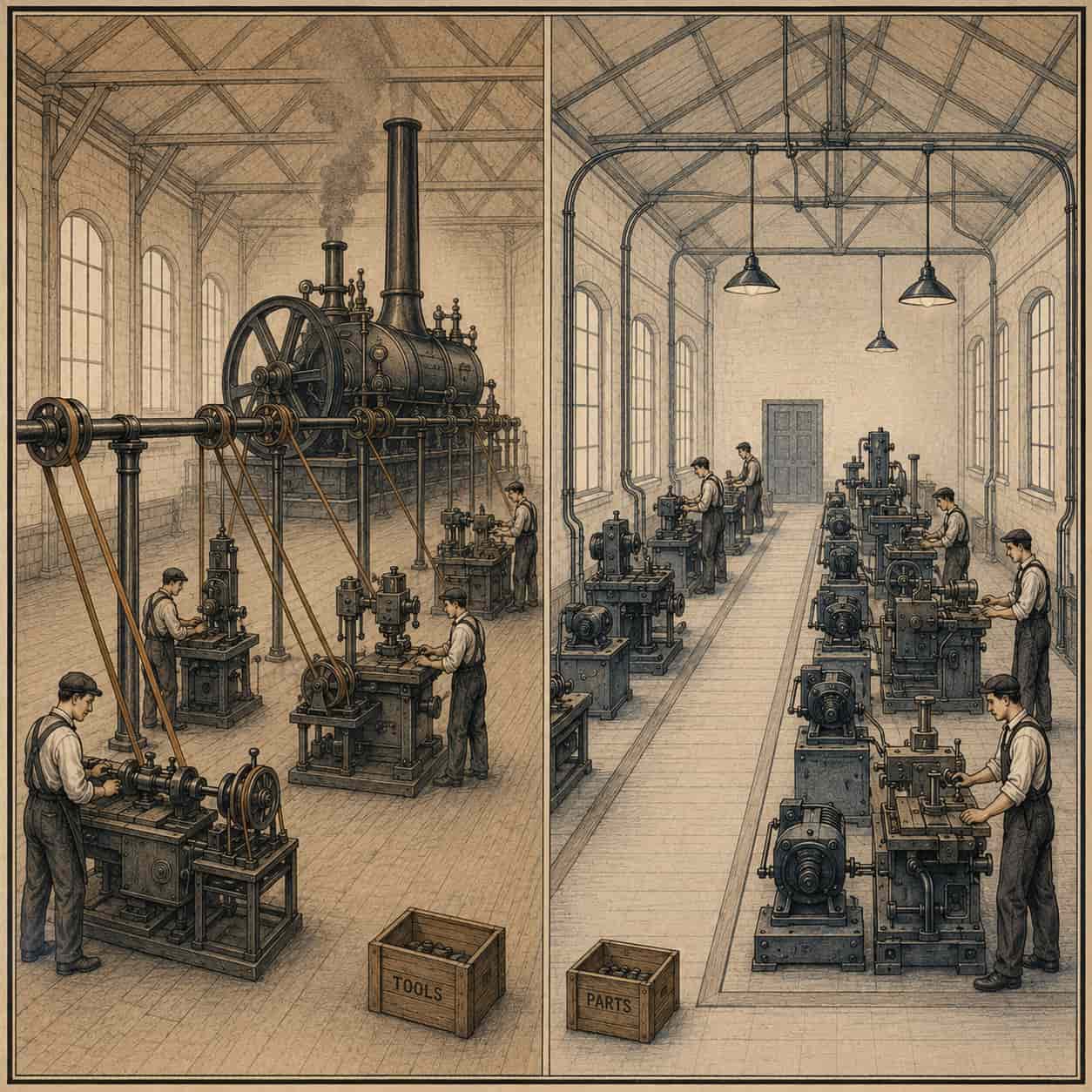
Client-server architecture created the first wave of implementation services. You had large upfront capital expenditure fees, significant one-off implementation costs, and consulting practices built to customise code per install. Projects could be measured in years and billed by time and materials. Incentives weren’t always aligned with the customer either, as a longer implementation meant a bigger invoice.
Wave two was the rise of SaaS, and the incentive flipped. Recurring revenue became the prize and a two-year implementation was no longer desirable, it was a threat to renewal, account growth, and customer lifetime value. Product teams moved to configuration over customisation, services teams innovated implementation offerings. The incentive became ARR protection: get customers live, eliminate shelfware, and maximise renewal rates.
Now we're in a third wave, and the incentive has shifted again. AI products earn through consumption not subscription (think token usage, our outcome-based models) so the financial driver is adoption and usage.
As with each of the preceding waves we see a pattern. Business model economics force a change to implementation services. Implementation tolerance has shrunk from weeks to days. The finish line has also moved. It’s no longer about just getting the customer live, it’s generating value.
This quiet reinvention means automating implementation wherever possible. And what’s possible has fundamentally changed with AI.
Why this one's harder but now possible
Customer facing work carries ambiguity, configuration complexity, and data handling that has previously required human intelligence beyond tooling.
AI has unlocked this, leading to new possibilities with LLMs good enough to do that work. Eighteen months ago, asking an AI model to handle a real configuration task or draft a migration plan from a messy source file would have been optimistic. Today it's a starting point.
Compare this to customer support, which is already well automated with a market full of AI-native vendors with mature end-to end work-flows.
Professional services automation vendors are playing catch up, focused on the admin around project management, resource planning, billing, but not on the delivery itself. At Hg, working with lighthouse portfolio companies, we started building this ourselves, automating the most common implementation activities. This allowed us to halve the implementation time while cutting delivery costs by 30%.
Why it's worth the difficulty
Time and cost are reward enough, but the prize is bigger than it looks from the outside.
Faster implementation is a flywheel for growth, not just a saving. A customer live sooner starts generating value sooner, which makes them more open to buying more from you. Lower delivery cost means more competitive pricing or entirely new business models your competitors can’t match.
For one portfolio company the hidden prize was reducing revenue at risk. Before their AI transformation, new customers waited months before anyone even started their setup. That's not a small inefficiency. That's lost revenue, sitting in a queue, building churn risk.
Underneath all of it sits a simpler, obvious truth. Customers don’t want an implementation; they want software working for them. Every hour of the process stands between them getting that.
Nobody switches systems for fun. The fear of a long migration is what keeps people from finding a better product. Shrink that migration and you change the calculus for every customer weighing up a move.
The Hg flywheel effect
We recently brought together implementation leaders from across our portfolio to compare notes on this shift. Two of them had already deployed dozens of AI agents handling setup tasks, with meaningful savings already banked, and a data migration process cut from weeks to days.
The rest of the room used AI to map their own processes in detail, identified what AI could take off their plate, and build a first version of their primary use case. They then developed a 90-day plan to put it into production whilst developing additional automation opportunities. All across two days.
The reinvention has already started, one implementation at a time, inside businesses that decided to step ahead rather than wait for the market.
The same shift that took hold in customer support is now available in professional services, and the businesses that treat it as a genuine rebuild, not a tooling upgrade, will be the ones that compound the advantage.
What excites us most is the customer impact. If you get it right, you get reduced switch friction, faster speed to value, increased focus on outcomes, and people deployed where they add the most.
Now we're accelerating this transition across the rest of the portfolio through our Hg academies. Each group does the same diagnostic. They map the process, find where AI earns its place, and leave with a clear plan to deliver. If you lead professional services at an Hg portfolio company, that's where this conversation continues.
Grant Watling and Dhruv Sethi work across Hg's portfolio on AI products and operations.
Related Articles

Insight
AI transformation's second act: 5 capabilities to lead the platform shift in 2026
Read article

Insight